

Packaging coatings play an important role in protecting packaging materials while improving their appearance and functionality. From paper and paperboard boxes to flexible packaging, different coatings can provide moisture resistance, grease protection, durability, gloss, or a premium finish for specific packaging requirements and applications.
Choosing the right packaging coating depends on the material, product, usage environment, and desired appearance. In this guide, we will explain the main types of packaging coatings, their key benefits, common applications, and important factors to consider when selecting a coating for your packaging.
Why Do Packaging Coatings Matter?
Ever picked up a product and immediately thought, “This feels cheap,” just from touching the box? That instant feeling often comes down to one thing most people never think about: the coating.
Packaging coatings are clear or functional layers applied to a package. It’s there to make it tougher, look better, or add special features like moisture protection.
Think of it as the secret sauce for your packaging. It protects what’s inside and tells your customers that your brand is high-quality.
| Goal / Scenario | Recommended Coating | Suitable For | Eco Option? | Notes |
|---|---|---|---|---|
| Moisture barrier | PE or biobased film | Cereal, snacks, e-comm | Yes | Compostable on request |
| Luxury appearance | Gloss / soft-touch | Perfume, luxury boxes | Water-based | Custom textures possible |
| Easy recycling | Monomaterial PE | Pouches, bags, labels | Yes | No separation needed |
| Food safety | FDA/EU-approved | Food, pharma, supplements | Yes | Certificates available |
Types of Packaging Coatings
Packaging coatings come in different forms, each designed to improve the protection, appearance, or functionality of packaging materials. Depending on the product and packaging structure, we can use coatings to create glossy or soft surfaces, highlight specific areas, protect against moisture and grease, or improve durability.
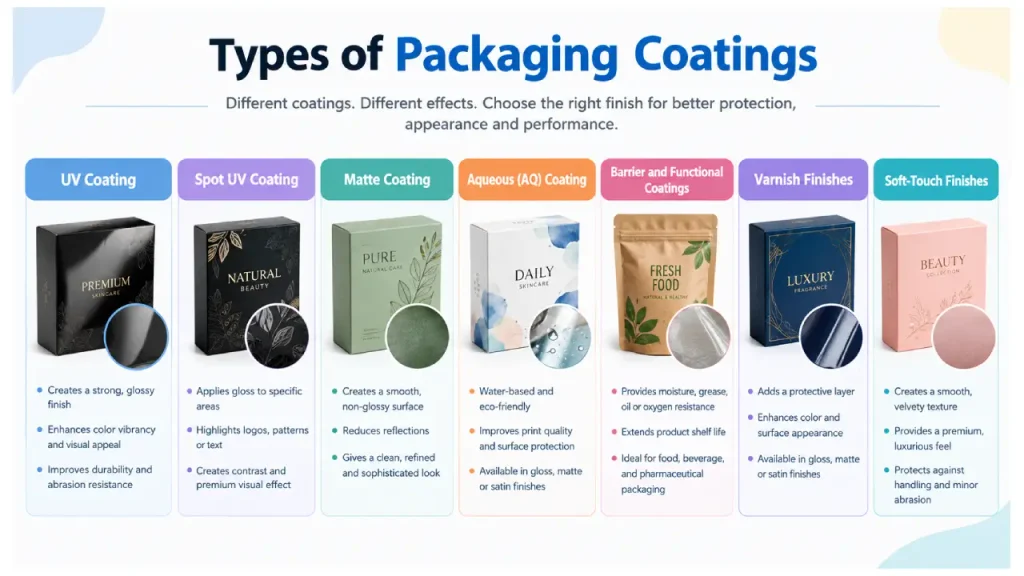
Understanding these coating types helps us select the right finish for different packaging applications.
Soft-Touch Finishes
Soft-touch finishes create a smooth, velvety surface that feels pleasant and slightly luxurious when customers handle the packaging. This coating can reduce the roughness of printed paperboard while providing a distinctive tactile effect. We commonly use it for premium boxes, cosmetic packaging, gift packaging, and other products where the physical experience matters.
One of the main benefits is its ability to create a high-end appearance without relying only on graphics or colors. Soft-touch coatings can also help protect the printed surface from everyday handling and minor abrasion. They are particularly suitable for brands that want their packaging to communicate quality, elegance, and sophistication.
Aqueous (AQ) Coating
Aqueous coating is a water-based coating applied over printed packaging to provide a protective surface. It dries quickly and is available in finishes such as gloss, matte, and satin. We can use AQ coating on paperboard cartons, folding boxes, brochures, and other printed packaging where surface protection and efficient production are important.
This coating helps improve resistance to scuffing, dirt, and everyday handling while enhancing the overall appearance of printed graphics. Because it is water-based, AQ coating is also widely used when manufacturers want a practical finishing option with efficient drying and a relatively low-impact production process.
Spot UV Coating
Spot UV coating applies a glossy UV finish only to selected areas instead of covering the entire packaging surface. We can use it to highlight logos, product names, patterns, images, or other important design elements. The contrast between glossy areas and an uncoated or matte background creates a noticeable visual effect.
Its key benefit is precise visual emphasis. By combining spot UV with matte or soft-touch surfaces, we can create contrast that makes specific packaging elements stand out. This technique is especially useful for luxury packaging, cosmetic boxes, gift boxes, and branded packaging where strong shelf appeal is important.
Barrier and Functional Coatings
Barrier and functional coatings are designed to provide specific protective properties beyond basic surface finishing. Depending on the formulation, they can improve resistance to moisture, grease, oil, oxygen, heat, or other environmental factors. We select these coatings according to the packaged product and the conditions the packaging needs to withstand.
These coatings can extend packaging functionality and help protect products during storage, transportation, and handling. They are useful for food packaging, beverage packaging, pharmaceutical packaging, and other applications requiring additional protection. The right functional coating can also help maintain product quality while supporting the performance of paperboard or other packaging materials.
Varnish Finishes
Varnish is a transparent coating applied to printed packaging to protect the surface and enhance its visual appearance. We can provide different finishes, including gloss, matte, and satin, depending on the desired packaging effect. Varnish can cover the entire surface or be applied selectively to specific design elements.
A varnish finish can improve resistance to handling, scuffing, and surface wear while making printed colors appear more attractive. It is a versatile option for folding cartons, product boxes, labels, and promotional packaging. We can also combine different varnish effects with printing and other finishing techniques to create distinctive packaging designs.
UV Coating
UV coating uses ultraviolet light to instantly cure a coating applied to the packaging surface. It can create a strong, smooth, and highly glossy finish that makes printed colors and graphics appear more vibrant. We commonly use it when packaging requires both an attractive appearance and improved surface durability.
A major benefit of UV coating is its resistance to abrasion and everyday handling. It can help protect printed surfaces while creating a premium visual effect. Full UV coating works well for product boxes, retail packaging, presentation boxes, and other applications where gloss, durability, and strong shelf appeal are important.
Matte Coating
Matte coating creates a smooth, non-glossy surface that reduces reflections and gives packaging a clean, understated appearance. We use it when brands want a sophisticated finish rather than the strong shine associated with gloss coatings. It works well with paperboard cartons, luxury boxes, cosmetic packaging, and professional product packaging.
Besides improving visual presentation, matte coating can provide protection against everyday handling and minor surface wear. Its low-reflection surface also makes printed text and design elements easier to view under strong lighting. When combined with spot UV or other finishes, matte coating can create attractive contrast and help important design details stand out.
How to Choose the Right Packaging Coatings?
Choosing the right packaging coating depends on more than appearance. We need to consider the packaging material, product requirements, storage conditions, printing method, desired finish, and budget. A suitable coating should provide the protection and visual effect the packaging needs without adding unnecessary cost or creating production challenges.
- Consider the Packaging Material — We first consider whether the packaging uses paper, paperboard, cardboard, plastic film, or another substrate. Different materials have different surface properties and coating compatibility. Selecting a coating designed for the specific substrate helps ensure proper adhesion, consistent coverage, and reliable finishing performance.
- Identify the Required Protection — We determine which environmental factors the packaging needs to resist, such as moisture, grease, oil, abrasion, or oxygen. For demanding applications, we may recommend barrier or functional coatings. Matching the coating’s protective properties with actual product requirements helps maintain packaging performance during storage and transportation.
- Choose the Desired Surface Finish — We select the finish according to the visual and tactile effect the brand wants to create. Matte provides a refined appearance, while UV and gloss finishes create stronger shine. Soft-touch coatings add a smooth tactile feel, and combinations such as matte with spot UV can create contrast.
- Consider Printing and Design Requirements — We check how the coating will interact with printed graphics, colors, logos, and other design elements. Some coatings can enhance color and surface appearance, while spot applications can highlight specific areas. Choosing the right finish helps us protect printed designs while maintaining the intended visual effect.
- Evaluate Durability Requirements — We consider how much handling the packaging will experience before reaching the customer. Products shipped through multiple distribution stages may need stronger resistance to scuffing, abrasion, and surface wear. A durable coating can help maintain the packaging’s appearance and reduce visible damage during transportation and retail handling.
- Balance Performance and Cost — We compare the coating’s performance with the overall packaging budget. Not every application requires a premium finish or specialized barrier layer. By identifying the most important functional and visual requirements first, we can select a cost-effective coating that delivers the necessary performance without unnecessary finishing expenses.
- Consider the Product and End Use — We also consider what the packaging will contain and where it will be used. Food, cosmetics, pharmaceuticals, electronics, and luxury products can have very different requirements. Understanding the end use allows us to recommend a coating that balances protection, appearance, functionality, and practical packaging performance.
1. What Job Does Your Coating Need to Do?
First, what is the main goal? Do you need protection, a great look, or a special function?
- Protection: Do you need to block moisture, oxygen, or sunlight? Different threats require different shields.
- Appearance: Do you want your package to be super shiny or have a cool, non-reflective look?
- Special Needs: Does your package need to survive in a microwave, or should it be easy to open?
2. Matching Packaging Coatings to Your Substrate
The material of your package, called the substrate, is very important. A coating that works great on plastic might peel right off of paper.
- Paper vs. Plastic: These are the most common materials, and they need different types of coatings to stick properly.
- Flexible vs. Rigid: A flexible pouch that bends needs a flexible coating, while a hard box can use a tougher, more rigid finish.
3. Are There Any Safety Rules to Follow?
If your product is food, medicine, or for children, there are strict safety rules.
- For food packaging in the US, coatings must be approved by the FDA (Food and Drug Administration) to make sure they are safe for food contact.
- Other industries, like pharmaceuticals, have their own safety standards to protect customers. Always make sure your coating is compliant.
4. What Is Your Budget and Production Scale?
Cost is always a factor. Some coatings are more expensive than others.
- Cost vs. Performance: The cheapest option isn’t always the best. A failed coating can lead to damaged products and unhappy customers. Find a balance that protects your product and fits your budget.
- Volume: Are you making thousands of packages or just a small, custom batch? The number of units you produce can affect which coatings are available and affordable for you.
Packaging Coatings in Action: Real-World Examples
Seeing how coatings are used can help you understand their value.
- For Food and Drinks: A juice bottle might use a special coating like EVOH (Ethylene-Vinyl Alcohol), which is a super-strong barrier that blocks oxygen and keeps the juice fresh for longer. A clear salad container uses an anti-fog coating so you can see the fresh greens inside without any condensation blocking the view.
- For Health and Pharmaceutical Products: Medicine in a blister pack is protected by a coating that keeps out moisture and air, ensuring the drug remains effective and safe.
- For E-Commerce and Shipping: A cardboard box shipped across the country needs to be tough. A scuff-resistant coating keeps it looking clean and professional, not beaten up. For electronics, anti-static coatings are crucial. They prevent static electricity from building up and damaging the sensitive circuits inside.
The Technology Behind Packaging Coatings: Materials and Application
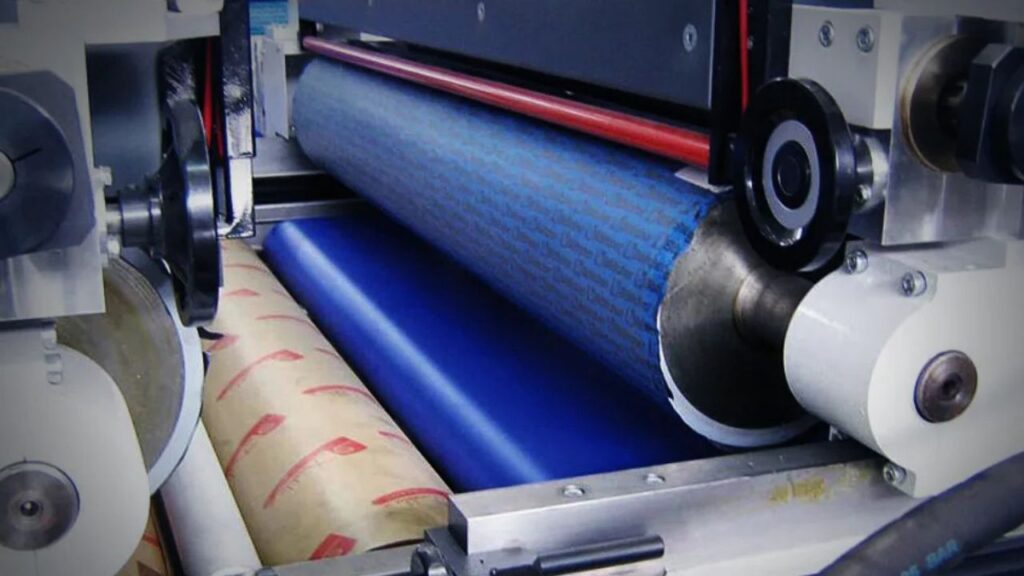
This is the “behind-the-scenes” of how coatings are made and applied, especially for paper and cardboard.
- Common Coatings for Paper: Aqueous coatings are water-based, eco-friendly, and great for general-purpose retail boxes. For extra durability, Polypropylene (PP) Lamination adds a thin, strong layer of plastic film. For sealing shipping boxes, hot melt adhesives are used to create a strong, instant bond.
- Application Methods: There are different ways to apply coatings. Roll coating is used for flat sheets of paper or film. Spray coating is great for odd-shaped items like bottles. Gravure coating is a high-precision method used for very thin, even layers.
- Curing (Drying) Methods: After a coating is applied, it needs to dry and harden. Air drying is a natural, slower process used for water-based coatings. Thermal curing uses heat to create a very durable finish. UV curing uses ultraviolet light to dry the coating instantly, which is perfect for high-gloss finishes.
Eco-Friendly Packaging Coatings and Our Planet
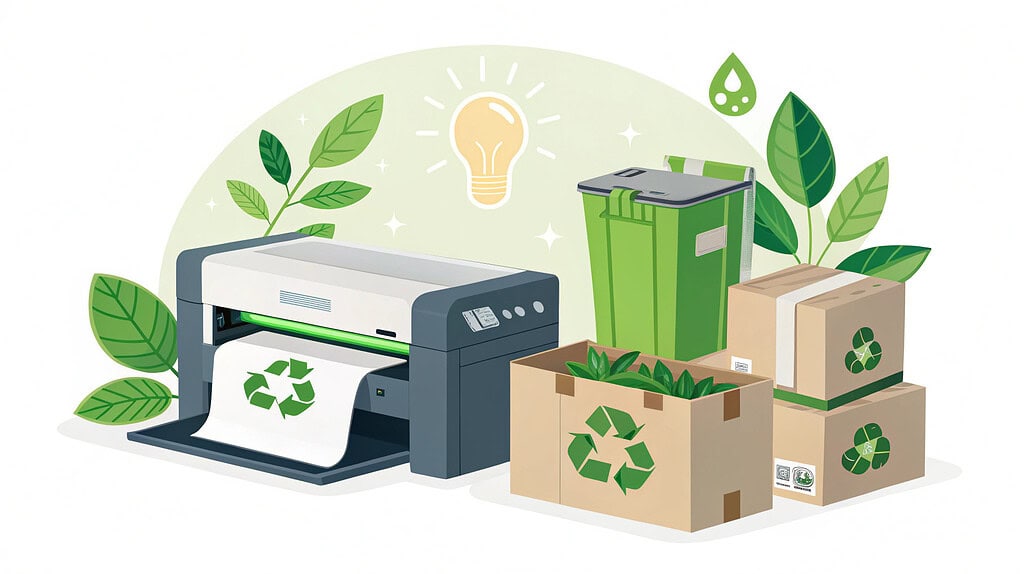
Today, eco-friendly packaging is more important than ever.
- Sustainable Options: Water-based coatings are a great green choice because they have fewer harmful emissions. There are also biodegradable coatings, often made from starch, that can break down naturally.
- Recycling Challenges: Some complex, multi-layer coatings can make recycling difficult because the materials are hard to separate. It’s important to choose a coating that doesn’t interfere with the recycling process.
- The Future is Greener: New innovations like monomaterial coatings are being developed. These use the same base material for the package and the coating, making recycling simple and efficient.
FAQ
Q: Will packaging coatings affect recycling or compostability?
We prioritize coatings that don’t hinder recyclability and offer compostable options for green brands.
Can I combine different packaging coatings (e.g., anti-fog + gloss)?
Yes, multi-functional coatings are possible—let us know your priorities.
Are all packaging coatings food-safe?
We only use coatings with full regulatory compliance for your product’s region and use.
Conclusion
Packaging coatings can make packaging more durable, attractive, and functional. Whether you need moisture resistance, grease protection, improved printability, or a premium surface finish, the right coating can significantly improve packaging performance. Understanding different coating options helps you select a solution that matches your product requirements, packaging material, application, and overall brand presentation.
Every packaging project has different requirements, so we can help you choose suitable coating materials, finishes, and packaging structures. From protective coatings to decorative surface finishes, we provide customized solutions based on your packaging size, material, design, performance requirements, and intended application.
Ready to create packaging with the right coating for your products? We can customize packaging according to your specifications and desired finish. Get wholesale custom packaging with your desired coatings from us, and let us help you develop packaging that combines protection, functionality, appearance, and reliable manufacturing performance.

 English
  العربية
  Deutsch (Sie)
  Español
  Français
  日本語
日本語  한국어
한국어  Italiano