
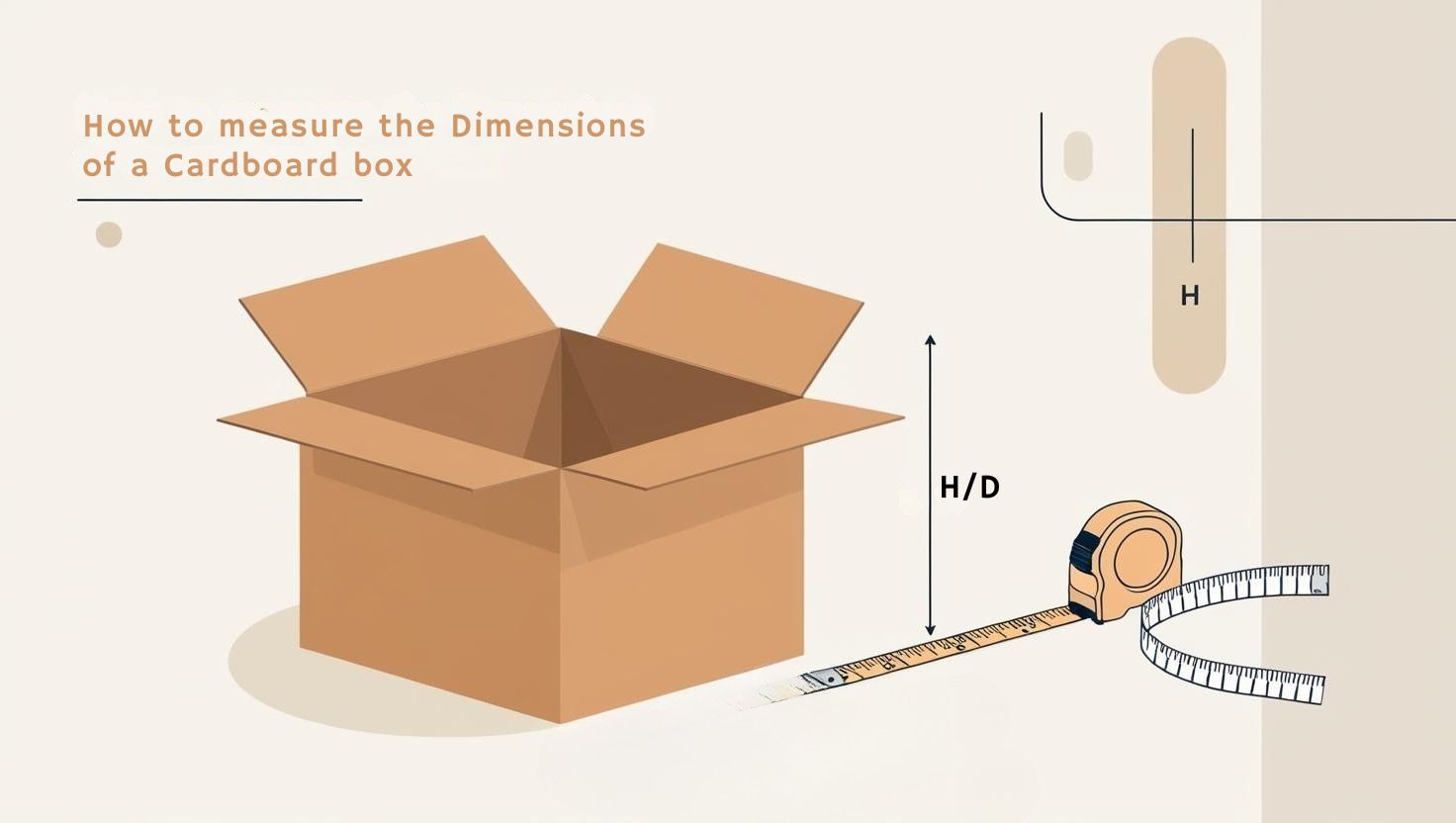
Knowing how to read and measure dimensions clearly during customize packaging, shipping products, or stacking boxes in storage, is key to smoother operations.
Why Knowing How to Read Dimensions is Crucial
Box dimensions are more important than most people realize. They help protect your products, lower shipping costs, make storage easier, and reduce waste. You can avoid damaged goods, wasted materials, and unnecessary expenses by choosing the right size and measuring correctly.
The Basics of How to Read Dimensions: Defining Length, Width, and Depth/Height (l×w×h, l×w×d )
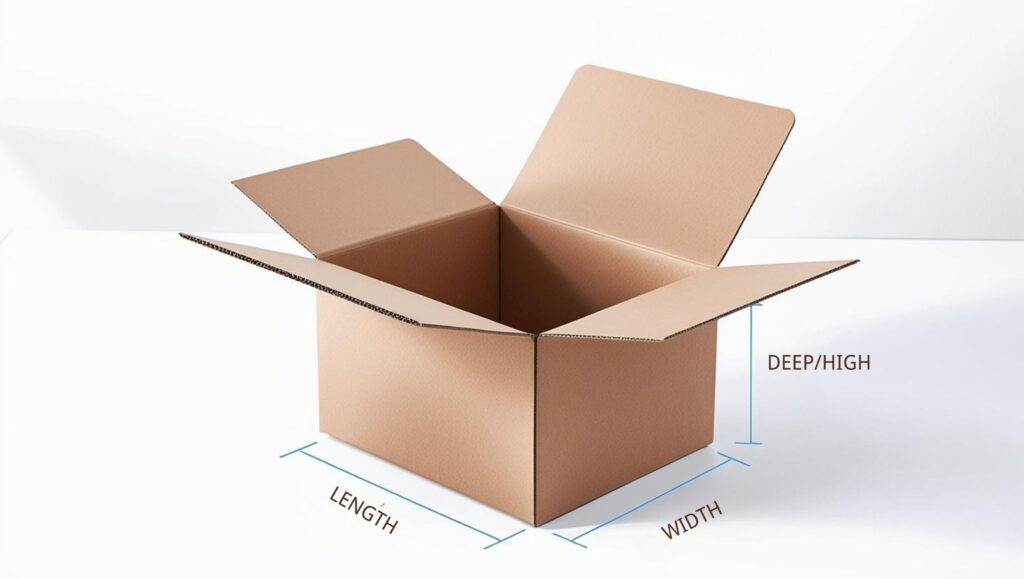
To measure a box properly, you need to understand the basic terms:
- Length: The longest side of the box when viewed from the top.
- Width: The shorter side of the box, also from the top view.
- Depth/Height: The vertical dimension, measured from the top to the bottom of the box.
Clearing Up Confusion: How to Read Dimensions Correctly
Here’s where things can sometimes get unclear about box dimensions. Depending on the context or standard, the terms for box dimensions might vary:
- Regional and Industry Standards:
- In North America, the format L×W×H is most commonly used, with “H” representing height (the vertical dimension).In Europe, L×W×H is also widely used. However, in specific cases, L×W×D (where “D” stands for depth) may appear, particularly when following the FEFCO standards (used by the European Federation of Corrugated Board Manufacturers).
2D vs. 3D Contexts: How to Read Dimensions for Different Packaging Types
When it comes to packaging, it’s important to distinguish between 2D and 3D contexts because the way dimensions are measured and described depends on the type of packaging. Let’s explore this distinction and address specific nuances, including orientation considerations for 3D packaging like folding cartons.
How to Read Dimensions of 2D Packaging
2D packaging refers to flat items where only two measurements—length and width—are relevant. These are typically used for items that don’t require a third dimension for volume, such as envelopes, pouches, or flat mailers. Examples of 2D Packaging
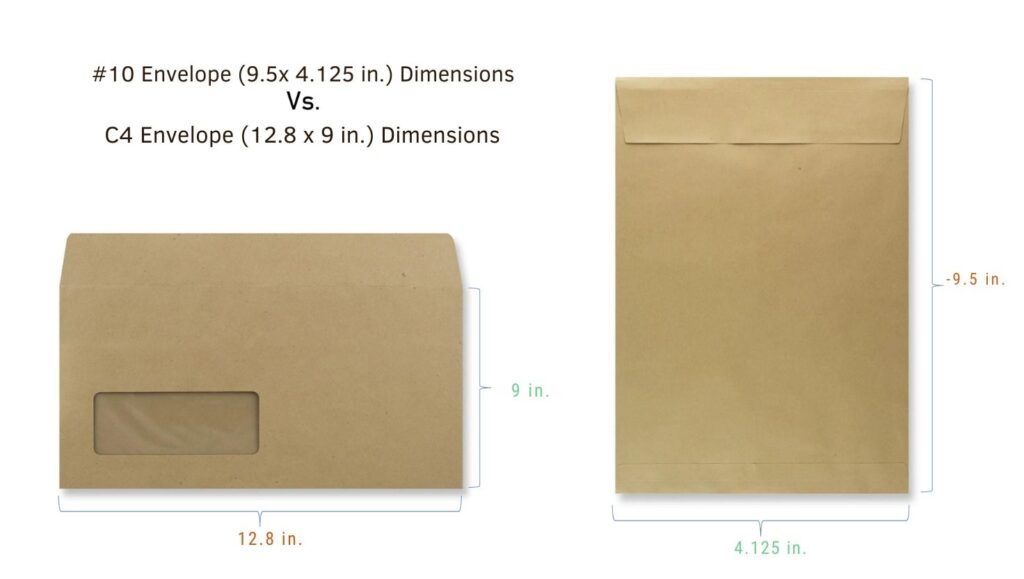
Standard Envelopes (Short Edge Opening)
These are classic envelopes with the flap located on the shorter side. Dimensions: Described as Length × Width, where the length is the longer side, and the width is the shorter side.Example: A standard #10 business envelope measures 9.5 × 4.125 inches.
Side-Opening Envelopes
These envelopes have the flap along the longer side. Dimensions: Also described as Length × Width, but width still refers to the shorter side, regardless of the flap location.Example: A C4 side-opening envelope measures 12.8 × 9 inches.
Flat Pouches
Common in food or product packaging (e.g., coffee bags or small product sleeves).Dimensions: Measured as Length × Width, where width is the shorter dimension.Example: A flat pouch may measure 8 × 5 inches, with the opening along the shorter or longer edge depending on the design.
Key Characteristics of 2D Packaging Measurements
Always described as Length × Width.
No depth or height is considered because 2D packaging doesn’t hold significant volume.
The orientation (top-opening or side-opening) might influence how the dimensions are perceived, but the measurement format remains the same.
How to Read Dimensions of 3D Packaging
3D packaging includes boxes and containers where all three dimensions—length, width, and depth/height—are critical. These are used for packaging products that require volume.
Examples of 3D Packaging
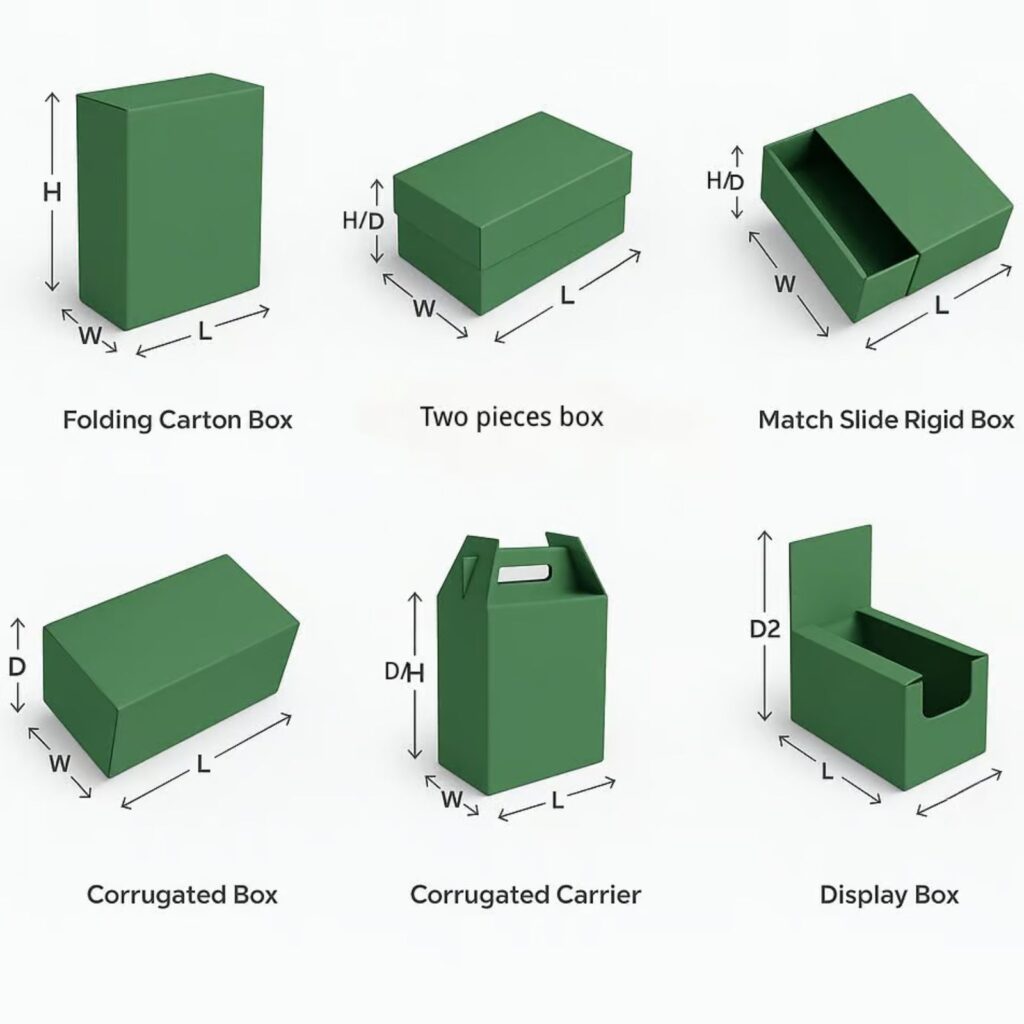
- How to Read Dimensions of Corrugated Boxes
- Commonly used for shipping or storage.
- Dimensions: Typically described as Length × Width × Height (or Depth), where:
- Length: The longest side of the box when viewed from the top.
- Width: The shorter side of the box when viewed from the top.
- Height: The vertical dimension from top to bottom.
- How to Read Dimensions of Folding Cartons
- Frequently used for retail products like cereal, cosmetics, or electronics.
- Measured the same way as corrugated boxes: l× w × h.
- How to Read Dimensions of Rigid Boxes
- Premium packaging for items like jewelry or electronics.
- Also measured as Length × Width × Height.
Industry Standards & Documentation for How to Read Dimensions
Clear documentation ensures consistency between manufacturers, shippers, and customers. Use labeled dimensions to avoid misinterpretation.
Documentation Examples
- For Manufacturers:
- Use internal dimensions to specify usable space inside the packaging.
- Example: “Internal dimensions: 12 × 8 × 10 inches (L × W × H)”
- For E-Commerce:
- Use external dimensions to describe the product size or how it appears to customers.
- Example: “Product size: 6 × 4 × 2 inches (L × W × H)”.
Clear documentation ensures smooth communication between manufacturers, shippers, and customers. Proper labeling of dimensions avoids misinterpretation and ensures functionality.
Why Internal Measurements Matter When You Read Dimensions
- Product Fit: Ensures the product fits securely inside the packaging.
- Protection: Leaves room for padding materials (e.g., foam, bubble wrap, air cushions) to prevent damage during shipping.
- Customization: Accurate internal dimensions are essential for designing packaging that fits the product and its protective materials.
The Importance of Clear Communication on How to Read Dimensions
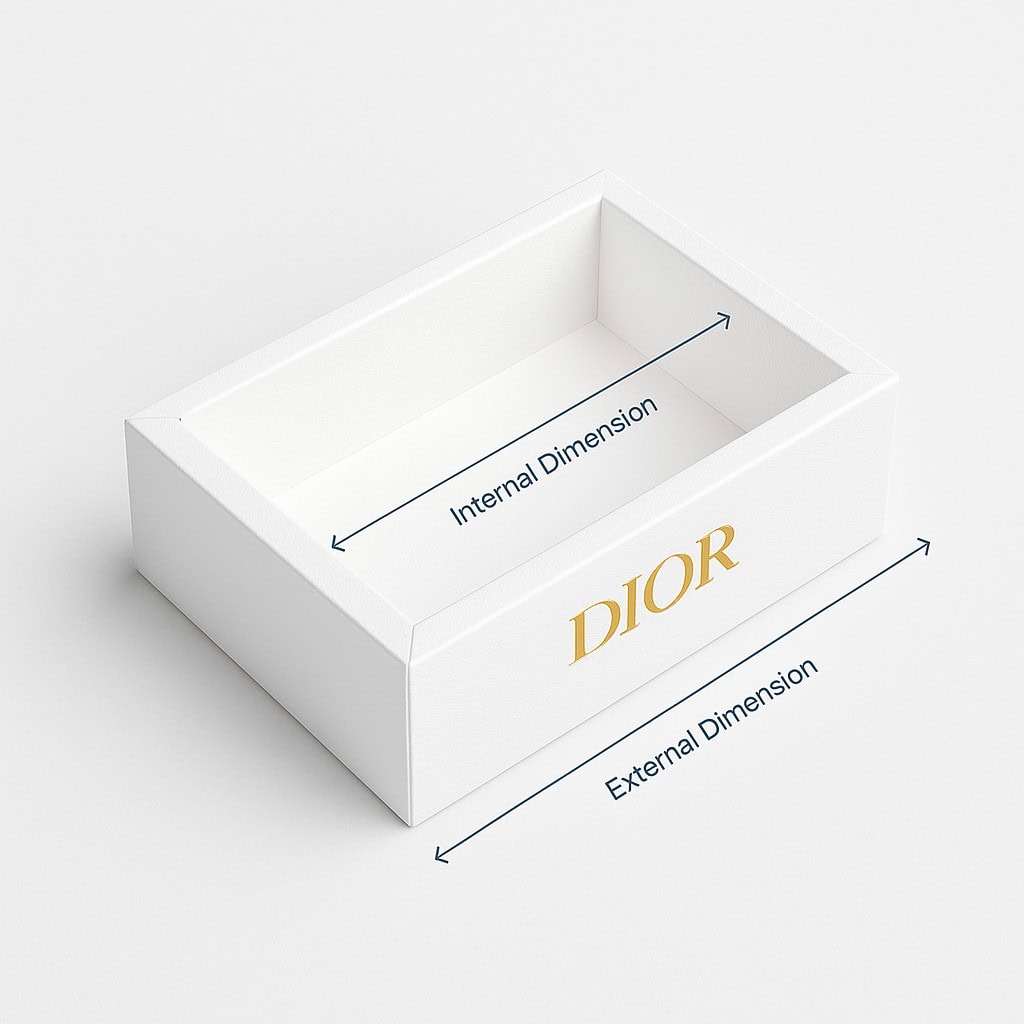
- Material Thickness: When customizing packaging, the thickness of materials (e.g., corrugated cardboard) impacts the difference between internal and external dimensions.
- Internal Dimensions: Usable space inside the box (important for product fit and padding).
- External Dimensions: Total size of the box, including material thickness (important for shipping and storage).
A Step-by-Step Guide on How to Measure and Read Dimensions
Accurate measurements are essential when designing, producing, or shipping packaging. Below is a detailed guide to measure both internal and external dimensions of packaging, along with a table summarizing the process for quick reference.
Tools Required
To measure packaging dimensions accurately, you will need:
Tape Measure: Ideal for larger packages like boxes.
Ruler: Useful for smaller items like envelopes or small cartons.
Digital Calipers: Best for precise measurements, especially for custom packaging where accuracy is critical.
Step 1: Measuring Internal Dimensions
Internal dimensions are used to determine the usable space inside a box, crucial for custom packaging to ensure the product fits properly.
Step 1: How to Read Internal Dimensions for a Perfect Fit
- Height:
- Open the box and measure from the base to the inside of the lid (not the external edges).
- This gives the vertical space available inside the box.
- Length:
- Measure the longest horizontal span inside the box. This is the longest side of the base when viewed from above.
- Width:
- Measure the shorter horizontal span perpendicular to the length.
Tips:
- If the box has padding or lining, remove it before measuring for accurate results.
- Use consistent units (e.g., all in inches or all in centimeters).
Step 2: MeasStep 2: How to Read External Dimensions for Shipping
External dimensions are used for shipping, labeling, and calculating storage or stacking requirements. These measurements include the thickness of the packaging material (e.g., corrugated cardboard).
How to Measure External Dimensions:
- Height:
- Measure from the base to the top of the lid, including the thickness of the material (e.g., the corrugated cardboard).
- Length:
- Measure the longest external span of the box, including any material thickness.
- Width:
- Measure the shorter external span, perpendicular to the length, and include the material thickness.
Tips:
- Be consistent when deciding whether to include features like flaps or protrusions in your measurements.
- Round to the nearest whole number for simplicity, especially when documenting dimensions for shipping or labeling.
Precision Tips for How to Read Dimensions Accurately
- Consistency: Always use the same unit of measurement across all dimensions (e.g., inches or centimeters).
- Rounding: Round measurements to the nearest whole number if exact precision is not required (e.g., for shipping).
- Double-Check: Measure twice to ensure accuracy. Small errors can lead to significant issues with fit or shipping costs.
Beyond the Basics: How to Read Dimensions for Volume and Weight
When working with packaging, understanding how to calculate volume and dimensional weight is crucial for optimizing shipping, storage, and logistics.
Volume Formula
The volume of a 3D package is calculated by multiplying its length, width, and height.
- Formula: Volume = Length × Width × Height
- Units: Cubic centimeters (cm³), cubic inches (in³), etc.
- Practical Uses:
- Shipping: Estimating how much space your package will occupy in a vehicle or container.
- Storage: Determining how many packages can fit in a warehouse or on a shelf.
In common, we can use the online Volume Calculator for Volume.
Example: If a box measures 12 × 8 × 10 inches, the volume is: 12 × 8 × 10 = 960 in³.
Dimensional Weight (DIM Weight)
Dimensional Weight, or DIM Weight, is a pricing method used by carriers to account for the space a package occupies versus its actual weight. It ensures that lightweight, bulky packages are priced fairly for the space they consume.
Formula: DIM Weight = (Length × Width × Height) ÷ DIM Divisor
DIM Divisor: A number set by carriers to standardize volume-to-weight conversions. (Common values: 139 for inches or 5000 for cm).
Practical Use: Compare the DIM weight to the actual weight of the package. Carriers usually charge based on whichever is higher.
Example: A box measures 12 × 8 × 10 inches and weighs 5 lbs.
Calculate DIM weight: DIM Weight = (12 × 8 × 10) ÷ 139 = 6.91 lbs.
- Comparison:
- Actual Weight: 5 lbs.
- DIM Weight: 6.91 lbs.
- The carrier charges based on DIM Weight (7 lbs) because it is higher.
Volume weight caculater
Volumetric Weight Calculator
Conclusion for How to Read Dimensions
Accurately measuring and communicating box dimensions is essential for efficient packaging, shipping, and storage. Understanding the difference between internal and external dimensions, factoring in material thickness and padding needs, and adhering to industry standards can help you avoid costly errors and improve overall operations.
Whether you’re designing custom packaging, optimizing shipping costs, or ensuring product protection, taking the time to measure properly and document dimensions is a small step that leads to big results
Ready to optimize your packaging process? Start by reviewing your current box dimensions and ensuring clear communication with us today!

 English
  العربية
  Deutsch (Sie)
  Español
  Français
  日本語
日本語  한국어
한국어  Italiano