
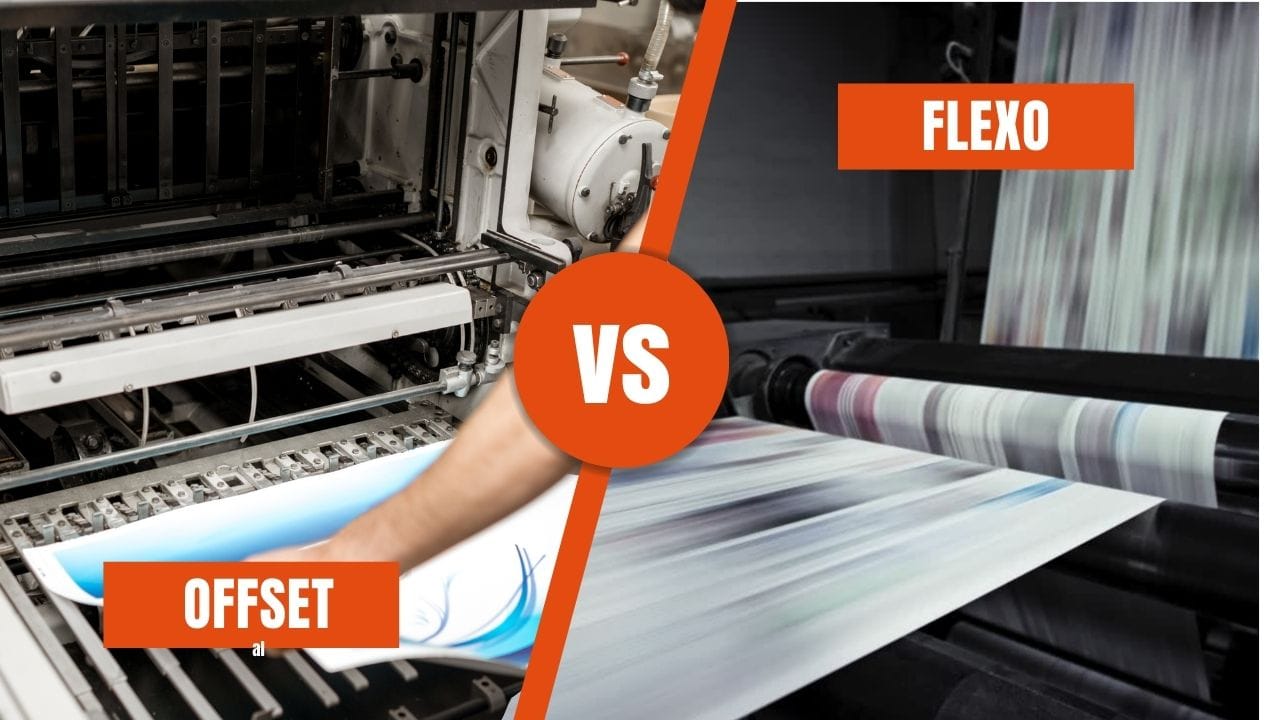
The Importance Of Learning the Offset Printing vs Flexo Printing
Choosing between offset printing vs flexo printing shapes your packaging strategy. This decision impacts production costs, print quality, and substrate compatibility.
Offset printing delivers exceptional image quality for premium packaging. Flexographic printing excels at high-volume production across diverse materials.
Objective of the Guide
This guide examines fundamental processes, ink systems, and applications. You’ll understand when each method delivers optimal results and cost efficiency for your packaging needs.
Quick Decision Matrix: Offset vs Flexo Printing
| If Your Packaging Material is… | …And Your Core Goal is… | Your Best Choice is |
|---|---|---|
| Flat paper or cardstock (e.g. folding cartons, premium labels) | Ultimate image quality: photo-level images, fine text, and precise color for premium branding | Offset Printing |
| Flexible or non-absorbent materials (e.g. plastic films, pouches, foil, shrink sleeves) | Printing on special materials: areas where offset cannot print directly | Flexo Printing |
| Corrugated board or thick cardboard (e.g. shipping boxes, displays) | Balancing cost and durability: efficient, economical printing on large, textured surfaces | Flexo Printing |
| Any material, for very large production runs (e.g. >50,000 units) | Minimize unit cost: pursue highest cost efficiency and speed at ultra-high volumes | Flexo Printing |
| Flat paper or cardstock | Integrate printing with finishing: combine printing, varnishing, die-cutting, etc. on one production line | Flexo Printing |
| Luxury brand packaging (e.g. cosmetics, electronics, premium goods) | Brand image first: packaging itself is part of marketing, must deliver unmatched texture and visual impact | Offset Printing |
Fundamental Principles and Mechanisms
1. Offset Printing
.Offset printing uses lithographic technology where ink transfers from metal plates to rubber blankets, then to substrates. Aluminum plates carry the image while ink adheres to hydrophilic areas. The rubber blanket ensures even ink distribution on flat, smooth surfaces.
Key components include aluminum plates, rubber blankets, ink fountains, and impression cylinders.
For more about offset printing click here for ultimate guide for offset printing.
2. Flexo Printing (Flexography)
Flexographic printing uses relief printing with flexible photopolymer plates transferring ink directly to substrates. Raised images on flexible plates get inked via anilox rollers. This enables direct transfer to various textures and curved surfaces.
Key components include photopolymer plates, anilox rollers, doctor blades, and rotary cylinders.
Bottom line: We recommend the most suitable printing process based on your packaging design and materials – you don’t need to worry about the technical details.
For more about flexo printing click here for ultimate guide for flexo printing.
Side by Side Comparison
| Aspect | Offset Printing | Flexo Printing |
|---|---|---|
| Plate Material | Rigid aluminium plates (flat-bed/rotary). | Flexible photopolymer or rubber plates (wrappable around cylinders). |
| Ink Transfer | Indirect (plate → blanket → substrate). | Direct (plate → substrate via anilox roller). |
| Ink Types | Oil-based, water-based, UV-curable. | Solvent-based, water-based, UV-curable (faster drying). |
| Substrate Requirement | Flat, smooth surfaces (paper, cardstock). | Versatile (flexible packaging, foil, plastic, corrugate). |
| Setup Complexity | Lengthy (plate creation, color calibration). | Faster (flexible plates, simpler cylinder setup). |
Key Differences Offset vs Flexo Printing

1. Printing Plates
Offset: Aluminum plates require precise etching and are susceptible to oxidation without proper maintenance. Flat-bed or rotary presses suit high-resolution graphics on paper.
Flexo: Flexible photopolymer plates are laser-engraved with relief images. They’re reusable and durable, wrapping around cylinders for non-flat substrates.
2. Ink Systems
Offset: CMYK process colors with spot colors mixed from primaries. Oil-based inks offer rich color depth but require longer drying times.
Flexo: CMYK plus dedicated stations for spot colors (premixed or in-house). Low-viscosity inks (solvent/UV-curable) dry quickly, enabling high-speed runs.
3. Substrate Versatility
Offset: Excels on flat, absorbent materials (paperboard, cartons, cards). Limited to smooth surfaces with secondary processes for finishing (lamination, die-cutting).
Flexo: Prints on absorbent (paper) and non-absorbent (plastic, foil) substrates. Integrates in-line converting (slitting, folding, laminating) for packaging.
4. Print Quality and Resolution
Offset: Higher resolution ideal for photo-realistic images and consistent spot colors. Perfect when your brand demands premium appearance and accurate color matching.
Flexo: Greatly improved in modern presses. Suitable for bold graphics, labels, and high-speed packaging. Best for large runs where durability and cost-efficiency matter most.
5. Cost and Run Length
Offset: Higher setup costs but plates become reusable assets. Once you exceed 3,000 units, savings in unit price vastly outweigh initial plate expense. Per-unit cost drops significantly with volume. We provide transparent ROI calculations and digital proofs so you only commit after approving results.
Flexo: Lower plate costs, economical for medium to very large runs (1,000-100,000+ units). Faster changeovers reduce labor and time costs.
Bottom line: We focus on your results – print quality, color consistency, substrate compatibility, lead time, cost per unit, and sustainability options.
Applications and Industry Use Cases
1. Offset Printing Applications

Packaging: Premium folding cartons, rigid boxes, and luxury cards. Perfect for cosmetics, electronics, specialty foods, and gift sets where image quality and color accuracy are paramount.
Branding: Short-run high-end labels, specialty tags, and promotional cards.
Typical scenarios: High-end 10,000-unit cartons with spot colors – offset delivers the premium quality your brand demands.
2. Flexo Printing Applications
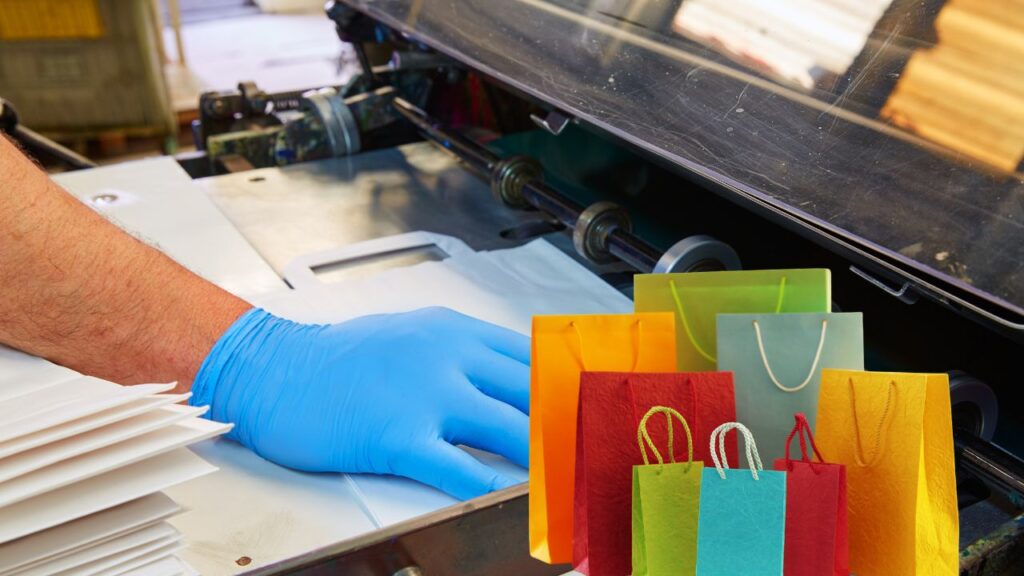
Packaging: Flexible pouches, roll labels, shrink sleeves, corrugated boxes, and bags. Ideal for snacks, beverages, shipping cartons, and high-volume retail packaging.
Labels and Tags: Food & beverage, logistics, and barcode labels with fast-drying, non-porous materials.
Industrial: Wallpaper, flexible films, and other roll-fed packaging materials.
Typical scenarios: New brand needing 500 gift boxes – we recommend digital or flexo for speed and flexibility. 50,000 labels with strict color consistency – flexo is the clear choice for cost and efficiency.
Environmental Impact and Maintenance
1. Ink Sustainability
Offset: Eco-friendly options including soy-based inks and recycled board are available. Just ask if you need green solutions.
Flexo: Water-based and UV-curable inks available for low-VOC, sustainable production.
2. Maintenance Requirements
Offset: Modern processes ensure maintenance won’t affect your timeline or product quality.
Flexo: Regular cleaning ensures stable color and quality, but doesn’t delay delivery.
Just let us know if you need sustainable materials or inks – we handle the rest. Your delivery timeline and product quality remain our priority regardless of which technology we use.
Technological Advances and Hybrid Solutions
1. Digital Integration
Offset: Digital pre-press makes setup fast and easy for quicker turnaround times.
Flexo: Hybrid presses combine flexo and digital for variable data like QR codes and unique labels on each package.
2. Quality Improvements
Flexo: Advanced plate technologies and screening methods now rival offset quality for many packaging applications.
3. Growth Planning and Risk Control
We recommend and plan the optimal process as your order size and brand grow. Start with one technology and seamlessly transition to another as volumes increase – no supplier changes required.
Decision-Making Guide
We provide transparent cost comparisons showing exactly when flexo becomes more cost-efficient and when offset’s quality justifies the investment. A simple chart visualizes the cost crossover point for your specific project.
You don’t need to become a print expert. Just share your packaging vision, expected quantity, and desired customer experience. We’ll analyze your requirements and recommend the optimal solution based on technical performance and cost efficiency.
Bottom line: Our team handles all complexity and delivers one clear recommendation. Whether you’re scaling from hundreds to thousands of units, we ensure seamless transitions without changing suppliers or compromising quality.
Conclusion
Flexo’s adaptability and advances including hybrid presses and improved plate technologies keep it leading packaging applications. Offset printing remains vital for high-end brand presentation where premium quality drives purchasing decisions.
Both technologies evolve toward greater sustainability and digital integration, offering more eco-friendly options and flexible production capabilities.
Ready for a clear, personalized recommendation and real print samples? Contact our team for a no-obligation print strategy session—let’s make your packaging a competitive advantage.



 English
  العربية
  Deutsch (Sie)
  Español
  Français
  日本語
日本語  한국어
한국어  Italiano