
Unlock the Benefits of Matte Lamination for Your Prints
What Is Matte Lamination?
Matte lamination involves applying a thin layer of plastic to printed materials, resulting in a smooth, non-reflective surface. This finishing technique enhances the material’s appearance while providing durability and protection against various forms of damage.
Matte lamination features several distinct characteristics that contribute to its appeal:
Appearance: The smooth, non-glossy finish helps soften color contrasts, making prints more readable.
Texture: The velvety feel enhances tactile interaction, giving printed pieces a high-quality touch.
Durability: Matte lamination protects surfaces from fingerprints, dirt, moisture, and wear, extending the lifespan of printed materials.
Compatibility: Matte-based finishes work well with special techniques like foil stamping and spot UV, making designs stand out while maintaining elegance.
Maintenance: Matte finishes are easier to clean, allowing users to wipe surfaces without damaging the print.
Matte lamination creates an appealing, sophisticated look while providing protection, making it a preferred choice for professionals in the printing industry.
Applications of Matte Lamination
Matte lamination serves various applications in printing and branding, providing a unique touch and protection for printed materials. This non-gloss lamination style enhances the perceived quality of products while ensuring durability.
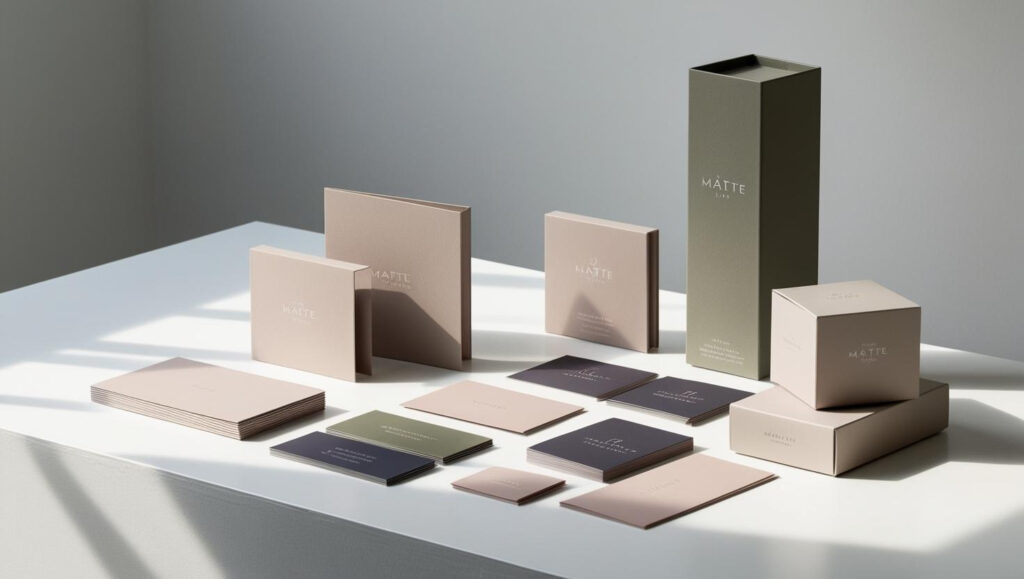
Packaging and Branding
Matte lamination plays a pivotal role in enhancing brand identity through packaging. Elevated products attract discerning customers who value quality.
Matte film lamination increases the sophistication of packaging, providing an elegant contrast to glossy alternatives.
This non-reflective finish communicates a brand’s commitment to quality and attention to detail. Notable benefits of matte lamination in packaging include:
Application | Benefits |
|---|---|
Product packaging | Creates a luxurious appearance. |
Labels | Ideal for writing, such as name tags. |
Menus | Provides a classy look with easy readability. |
Promotional materials | Enhances visual appeal for events. |
Matte laminated items, such as business cards, exude professionalism. Their silky texture invites tactile interaction, ideal for professions like eyelash extension specialists, who often rely on sophisticated presentation.
The muted finish allows colors to blend seamlessly, making graphics and text more appealing.
High-end prints, including art prints and posters, reflect the subtle quality of matte finishes, enhancing artwork by reducing glare. In listings, matte lamination stands out for the following stationery uses:
Business cards: Ideal for networking in a competitive industry.
Art prints: Enhances subtle qualities, perfect for gallery display.
Book covers: Professional finish for coffee-table books.
Instructional brochures: Organized and readable.
Benefits of Matte Lamination
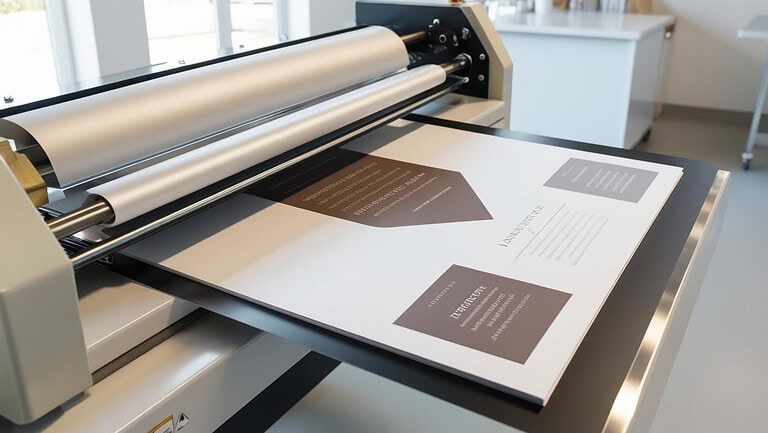
Enhanced Appearance
Matte finish lamination delivers a sophisticated look. It softens colors and graphics, making printed materials like product catalogs and packaging more visually appealing.
A silky surface provides a classy sheen that elevates high-end print projects. This finish just looks good but also adds a tactile quality, inviting clients to engage with the printed pieces.
Improved Protection
Matte film lamination protects against everyday wear and tear. It guards surfaces from scratches, fingerprints, and moisture exposure.
This durability is especially important in busy environments where printed materials can easily get damaged.
Although matte lamination offers less protection against moisture than gloss, it still significantly extends the life of printed products.
Consider the impressive longevity: a well-laminated booklet can last years without showing obvious signs of damage.
Reduction of Glare
Non-gloss lamination minimizes glare, ensuring that printed content remains easily readable under various lighting conditions.
This characteristic benefits specialists and brand owners alike, especially during consultations or presentations where clients often integrate printed materials.
Imagine showing your portfolio without distracting reflections—it enhances client focus on your work.
For more about the ultimate of lamination please click here to see out guides.
Understanding Lamination Types
Lamination comes in several types, with three primary options being matte, gloss, and soft touch. Here’s a comparison:
Lamination Type | Finish | Appearance | Ideal Use Cases |
|---|---|---|---|
Matte Lamination | Smooth, non-reflective | Softens colors and reduces glare | Brochures, business cards, packaging |
Gloss Lamination | High-shine, reflective | Intensifies colors and adds vibrancy | Marketing materials, promotional items |
Soft Touch Lamination | Velvety, soft sheen | Combines matte appearance with a texture | High-end packaging, luxury items |
Matte lamination and gloss lamination serve different aesthetic and functional purposes.
Understanding these differences can help brand owners and eyelash extension specialists choose the right finish for their printed materials.
Visual Differences
Matte lamination yields a non-glossy, soft finish, making it ideal for creating a sophisticated, understated look.
It absorbs light, reducing glare while enhancing readability. On the other hand, gloss lamination gives a shiny, high-impact finish that makes colors pop and appear more vibrant. While gloss attracts attention, it can create glare issues.
Feature | Matte Lamination | Gloss Lamination |
|---|---|---|
Finish | Non-reflective, soft | Shiny, high-impact |
Light Reflection | Absorbs light, reducing glare | Reflects light, enhancing vibrancy |
Color Appearance | Colors may appear subdued or dull | Colors appear bold and dynamic |
Ideal Uses | Formal prints, book covers, cosmetics | Marketing materials, promotional items |
Performance Characteristics
Performance characteristics differ significantly between matte and gloss lamination.
Matte lamination excels in protecting against fingerprints, scuffs, and scratches, which makes it easier to maintain the appearance of printed materials.
Gloss lamination, while visually striking, is less resistant to visible wear, as scratches and smudges can become more apparent.
Protection: Matte lamination better withstands everyday wear, hiding scratches and maintaining a clean appearance.
Receptiveness to Ink: Matte surfaces allow for easy writing, making them suitable for menus or labels. Gloss lamination, but, poses a challenge for writing.
Glare Management: Matte finishes do not produce glare, ensuring that important content remains legible in various lighting conditions.
Choosing between matte and gloss lamination depends on the needs of the printed materials and the impression you wish to convey.
Considerations When Choosing Matte Lamination
Choosing matte lamination involves understanding specific factors that influence the final product. Each decision impacts both aesthetic and functional aspects.
Project Requirements
Identifying project requirements is vital. Different printed materials demand distinct lamination techniques.
For instance, if I’m working on a product catalog, matte lamination provides a sophisticated finish that softens colors and creates an inviting texture.
Conversely, if I’m preparing a poster for a high-traffic event, I might prefer gloss lamination for its vividness and durability. Consider these points:
Material Type: Use matte lamination on thicker papers for better adherence and impact.
Usage: Use matte finishes for items that won’t undergo frequent handling, as they may scratch over time. Items like business cards and book covers benefit from the durability of matte film lamination.
Lighting Conditions: Use matte lamination when glare reduction is critical. The non-gloss lamination minimizes reflections, enhancing readability.
Industry it fit for
Legend: ★ = Required; ○ = Optional
nail polish
★Protection
Cosmetics
★Basic
Perfume
★Basic
wigs
★Protection
hair extensions
★Protection
candle
★Basic
soap
★Protection
wine
★Protection
luxury gift
★Basic
bath bomb
★Protection
cupcake
★Protection
tea
★Moisture-proof
cookie
★Outer
food
★Protection
chocolate
★Basic
baking
★Outer
Presentation
★Protection
clothing
★Dust-proof
shoes
★Dust-proof
Hat
★Dust-proof
retail
★Basic
subscription
★Durable
wholesale
★Basic


 English
  العربية
  Deutsch (Sie)
  Español
  Français
  日本語
日本語  한국어
한국어  Italiano