

What is foil stamping? It’s a finishing process that gives printed materials a shiny, metallic effect. In this article, we’ll briefly explain foil stamping and compare the two main techniques: hot foil and cold foil stamping.
What is Hot Foil Stamping: A Simple Explanation
Hot foil stamping is a way to add shiny or colorful designs to things like paper, cardboard, or plastic. First, a special machine heats up a metal stamp called a die, which is often made of brass. The material you want to decorate is placed under this die.
A thin roll of metallic or colored foil is also put between the die and the material. When the machine presses down, the heat and pressure make the foil stick to the material in the shape of the die’s design. This creates a bright, precise, and long-lasting decoration on the surface.
Applications for Hot Foil Stamping

Based on your substrate and the type of finish you want, you can choose from one of the three hot stamping techniques discussed below
- Standard Flat Foil Stamping
- Features: This method applies foil stamping on a flat surface. The stamping die makes direct contact with the material, creating a smooth metallic layer.
- Advantages: Low cost, high production yield—ideal for mass production, such as gift boxes and cards.
- Embossed (3D) Foil Stamping
- Core Technology: Combines foil stamping with an embossing mold, achieving a raised effect of 0.3–1.2 mm in height.
- Applications: Commonly used for luxury perfume packaging and premium wine bottle labels.
- Registered (Positioned) Foil Stamping
- Process: First, print the base color, then use precise machine alignment to apply foil stamping, keeping the registration error under 0.1 mm.
- Value: Allows for overlapping of foil and printed graphics, such as a cosmetic box logo combined with a gradient background for a more premium look.
Guide to Common Hot Foil Colors and Their Applications
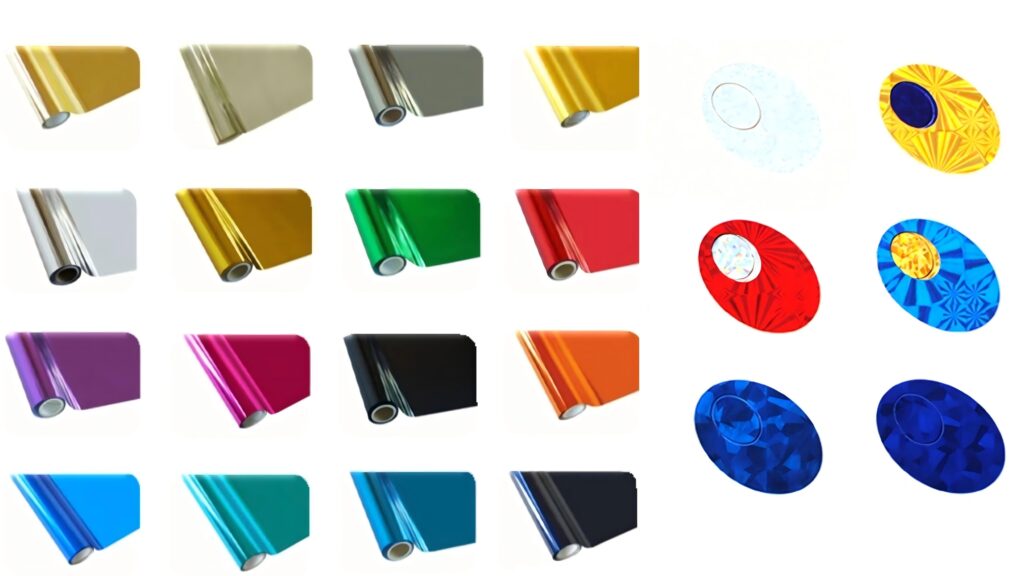
Bright Gold
- Features: Highly reflective metallic shine with strong visual impact. Suitable for fine lines (as thin as 0.2 mm).
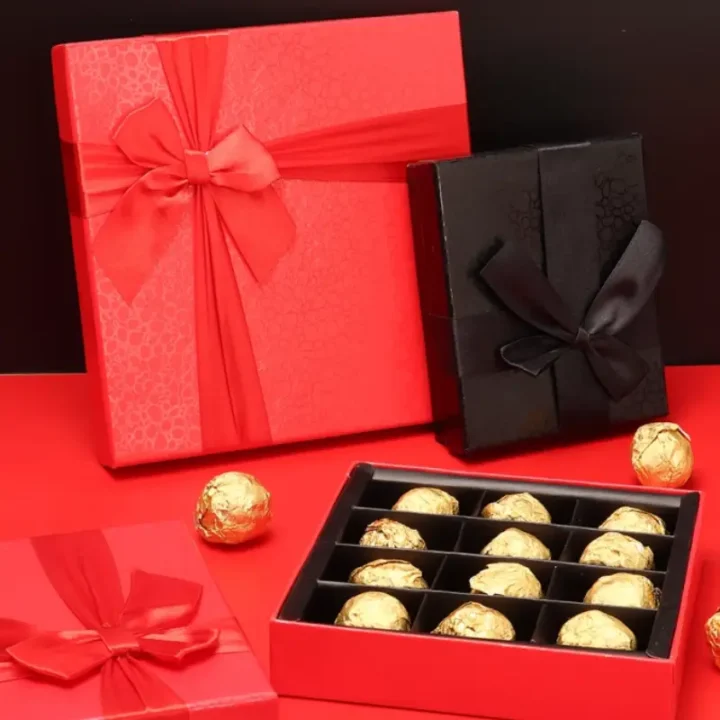
- Typical Uses: Luxury packaging (e.g., Moutai Zodiac liquor), high-end electronics branding.
Matt Gold
- Features: Reduced brightness for a soft, gray-gold appearance and delicate touch.
- Applications: Luxury gift box linings, art book covers.
Silver Stamping
- Advantages: Cost-effective (about 60% the price of gold foil), suitable for large area coverage.
- Examples: Logos on cosmetic bottles, energy efficiency labels on appliances.
Champagne Gold (Red Gold)
- Visual Effect: Warm-toned metallic, combining festive and upscale appeal.
- Best For: Holiday gift boxes (e.g., Chinese New Year, Christmas), wedding items.
Black Gold
- Features: Black base with gold patterns for a mysterious, luxurious look.
- Applications: High-end watch dials, jewelry boxes, cigar boxes.
Royal Blue Gold
- Applications: Tech products (e.g., smartphone frames), business gifts.
Holographic Gold
- Effect: Dynamic color shift with rainbow spectrum appearance.
- Technical Barrier: Requires laser-engraved dies; costs 50% more than standard foil stamping.
Advantages for Hot foil Stamping
- Very Durable: Hot foil stamping uses heat and pressure, so the foil sticks firmly to the surface. This makes it hard to scratch off, fade, or wear out, even if the product is handled a lot or exposed to different conditions.
- Eye-catching Look: The shiny metallic finish—like gold, silver, or copper—makes products look elegant and special. This helps items stand out and look more valuable in stores.
- Great for Details: Hot foil stamping is very good at showing fine lines, small text, and detailed designs. The heated die helps create sharp, clear images, which is perfect for logos, emblems, and detailed artwork.
Limitations for Hot Foil Stamping
- High Starting Costs: Hot foil stamping needs special machines and custom metal dies, which can be expensive to buy and keep running. The process also uses a lot of energy to heat the equipment. This can be a little big cost, especially for small businesses.
- Not for All Materials: Because this method uses high heat, it can’t be used on materials that are sensitive to heat. Some plastics or thin papers might melt, warp, or get damaged, so they aren’t suitable for hot foil stamping.
After exploring the various techniques and color options in hot foil stamping, it’s also important to examine cold foil stamping—a process that offers unique advantages and applications within the world of metallic finishes.
Cold Foil Stamping: An In – Depth Look
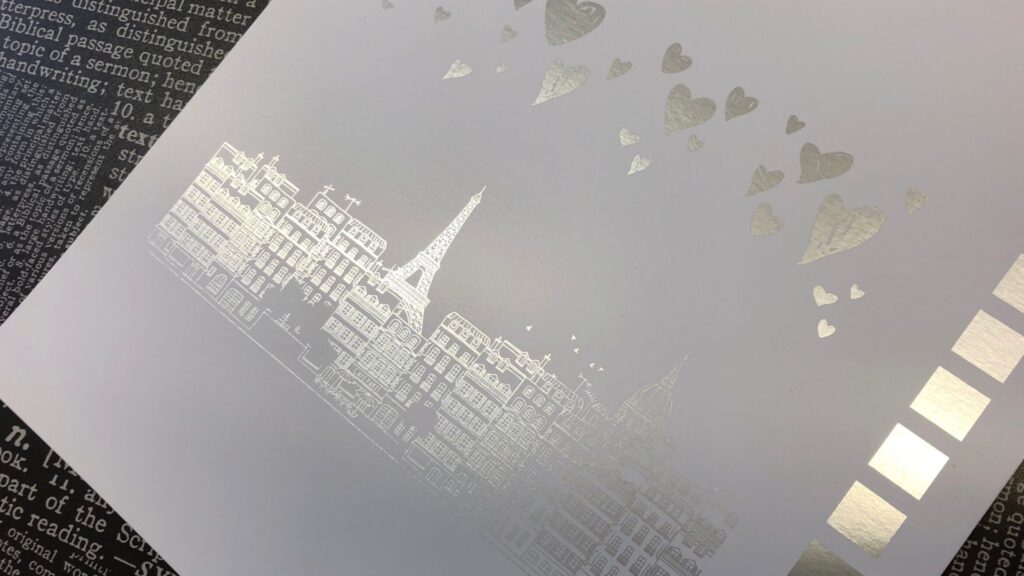
Cold foil stamping does not use heat. Instead, an adhesive is printed onto the material first, using common printing methods like lithography or flexography.
The metallic foil is then pressed onto the areas with adhesive. This process makes it possible to combine foil stamping with other printing techniques—like CMYK or spot color printing—in one step.
Applications
Cold foil stamping is widely used in packaging and label printing for mass-market products. It’s especially popular for consumer goods packaging, such as food, beverages, and household items, where attractive designs are important but budgets may be limited. Cold foil stamping is also commonly used for promotional materials, greeting cards, and book covers.
This is just one part of creating exceptional packaging. Read our Ultimate Guide to Post-Printing Technologies to learn about the complete system, from blueprint to finished product.
Advantages
- Cost-Efficiency: Cold foil stamping does not require expensive heating equipment or custom metal dies. This lowers production costs—especially for large print runs. It also fits easily into existing printing processes, saving both setup time and operating costs.
- Design Flexibility: This method allows for a lot of creative freedom. You can use it for very fine details or cover large areas with foil. It can also create complex patterns, color gradients, and multi-colored foil effects, making it a great choice for eye-catching designs.
- Substrate Compatibility: Because no heat is used, cold foil stamping works well on many types of materials—including those that can be damaged by heat, such as certain plastics, thin papers, or materials with heat-sensitive coatings.
Limitations
- Durability Concerns: Cold foil stamping is generally less durable than hot foil stamping. Since the foil is attached with adhesive rather than heat and pressure, it can be more likely to peel, scratch, or fade over time, especially if the product is handled a lot or exposed to tough conditions.
- Adhesive-Substrate Compatibility: The quality of cold foil stamping depends a lot on how well the adhesive works with the material being printed on. If the adhesive and substrate are not compatible, the foil may not stick properly, leading to issues like uneven coverage or the foil coming off too soon.
Conclusion
In short, hot foil stamping is perfect for fancy, high-end looks, while cold foil stamping is great for creative designs on a budget. Pick what fits your project best—there’s no wrong answer!
Want your packaging to shine?
Talk to us today and see which foil stamping style works for you!

 English
  العربية
  Deutsch (Sie)
  Español
  Français
  日本語
日本語  한국어
한국어  Italiano