
Have you ever opened a package only to find your product damaged or scattered inside? It’s frustrating and leaves a bad impression. That’s why packaging inserts matter—they keep everything safe and organized, while making your brand look professional. Want to know what packaging inserts are and how the right insert can protect your products and boost customer satisfaction? Read on to find out.
What are packaging inserts: Definition and Classification
Before you choose the right insert, you need to know exactly what packaging inserts are and how they work.
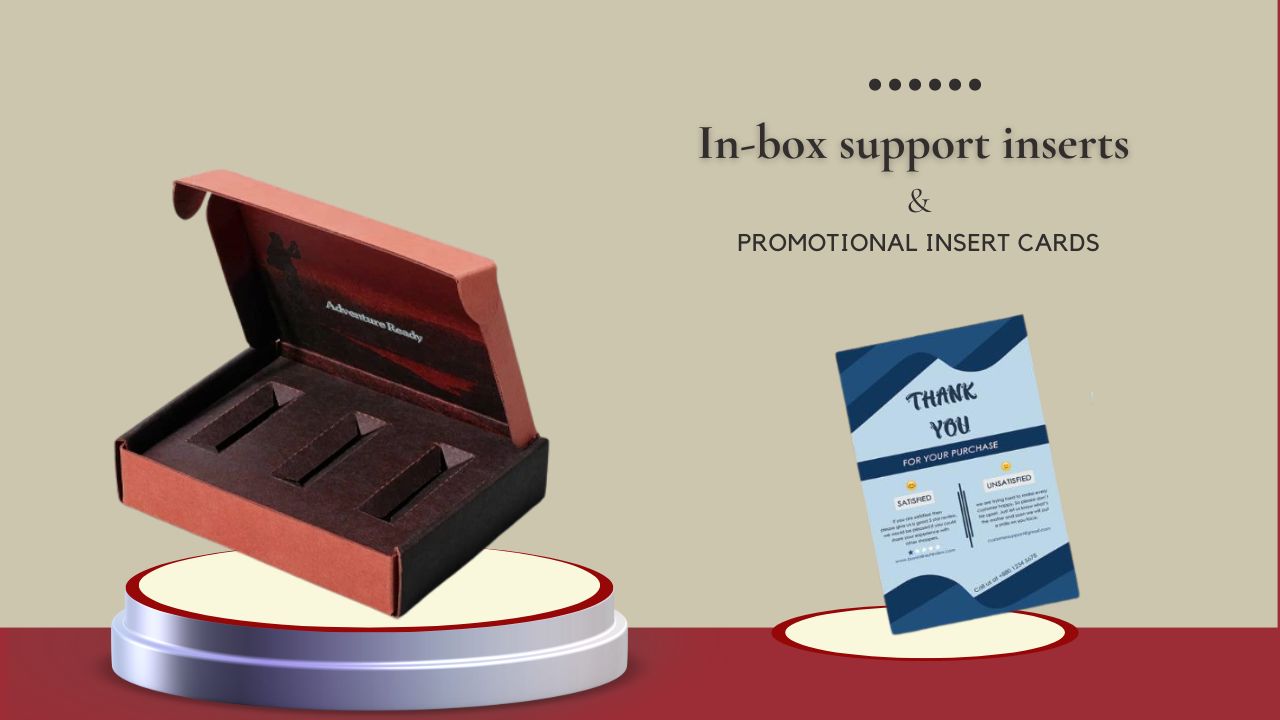
Packaging inserts are extra items placed inside the product box, other than the product itself. These can be simple paper cards, foam supports, samples, or even small gifts. Each type is designed for a specific purpose.
There are two main types of packaging inserts, each serving a unique role:
- In-box support inserts. These inserts keep products safe during shipping. Foam pads, cardboard dividers, and molded pulp trays are common examples. Their main job is to prevent movement and absorb shocks.
- Promotional insert. These inserts are for marketing and building customer relationships. Think thank-you cards, discount vouchers, or free samples. They add value and encourage customers to buy again.
1. Paper-Based Material Packaging Inserts
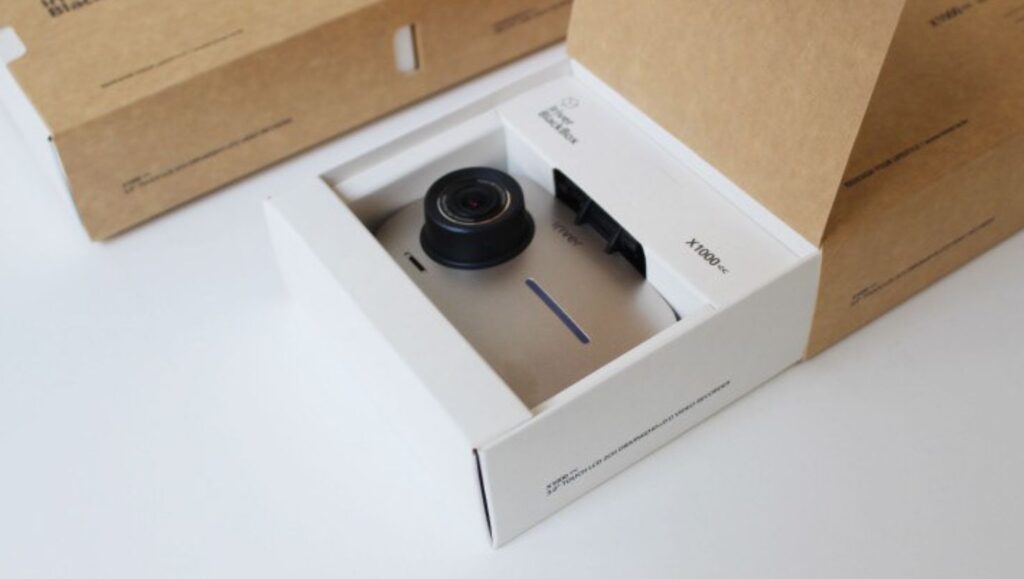
Paper-based inserts are common because of their affordability and flexibility. The main types are different cardboards and pulp-molded inserts.
1) Cardboard Packaging Inserts
Not all cardboards are the same. Each type offers unique benefits for packaging inserts:
- Corrugated cardboard is ideal for large or delicate products like electronics or bottles. It absorbs shock and handles heavy weights.
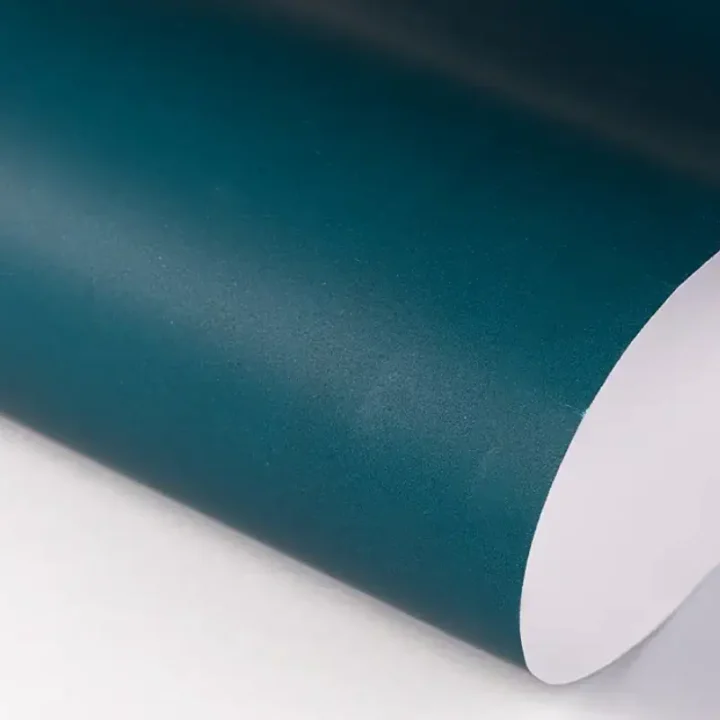
- Cardstock works well for light, non-breakable items such as cosmetics or accessories. It’s great for vivid printing and branding.
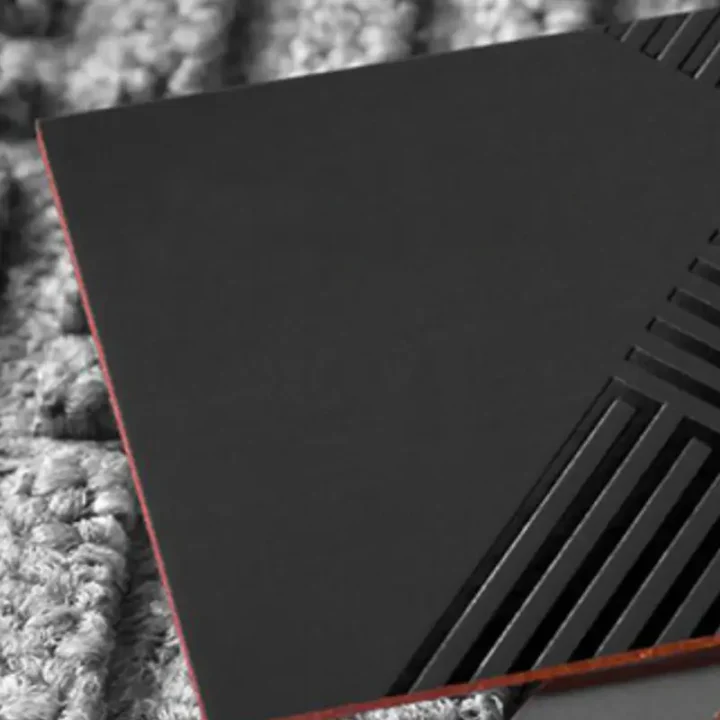
- Hardboard is stiff and strong, used for products that must not bend, such as tablets or hardcover books.
2) Pulp-Molded Packaging Inserts
Pulp-molded inserts are made from recycled paper, pressed into custom shapes. This insert type has distinct advantages and limitations:
Advantages:
- Eco-friendly: Made from recycled materials and is biodegradable.
- Custom shapes: Can be molded into round, polygonal, or complex shapes—much more versatile than flat board inserts.
- High-end finish: Advanced pulp molding can achieve a glossy, plastic-like surface, enhancing the product’s premium feel.
Limitations:
- No flexibility—precise sizing required: Because pulp-molded inserts have no elasticity, dimensions must exactly match the product. Any error reduces protection.
- High mold cost and order minimums: Each product size requires a separate mold, with setup costs and a typical minimum order quantity of 10,000 units or more.
- Longer production time: The full process from mold creation to mass production often takes 2–4 weeks.
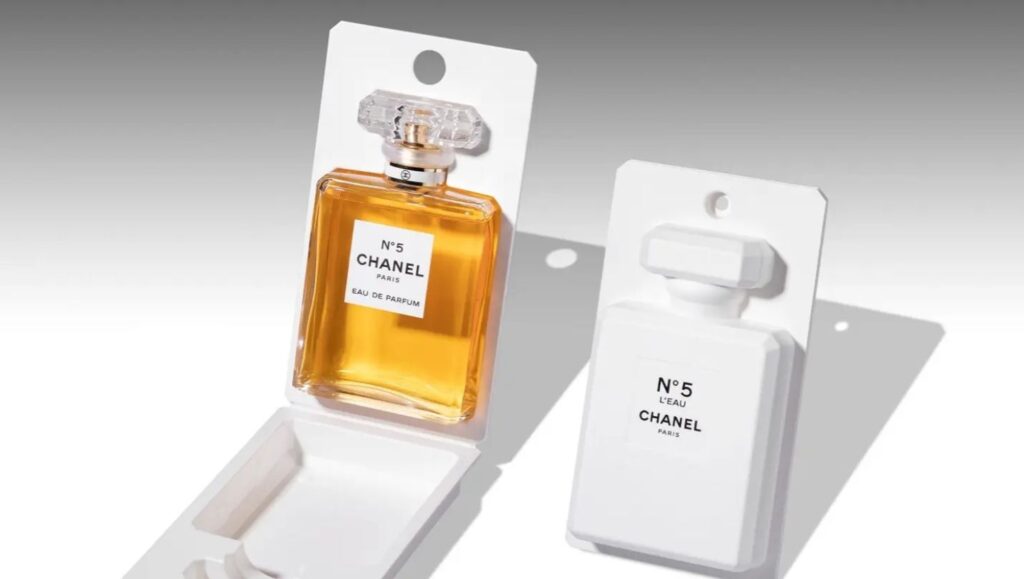
Example: A tech brand launches a new wireless charger set. They use a glossy, custom-shaped pulp-molded insert to hold each component securely in a round gift box.
The insert fits perfectly, looks high-end, and aligns with their sustainability message. In contrast, a standard cardboard insert would only work for a simple square box, with much less visual impact.
Choosing the right insert: If your product is standard-shaped and you need flexibility and speed, cardboard is usually best. If you require unique shapes, premium appearance such as perfume, or want to emphasize eco-friendly values—and your order volume justifies the cost—pulp-molded inserts provide a solution that stands out.
Ultimately, the right packaging insert balances protection, fit, appearance, and cost while supporting your brand’s promise.
2. Foam Material Box Inserts: Properties and Applications
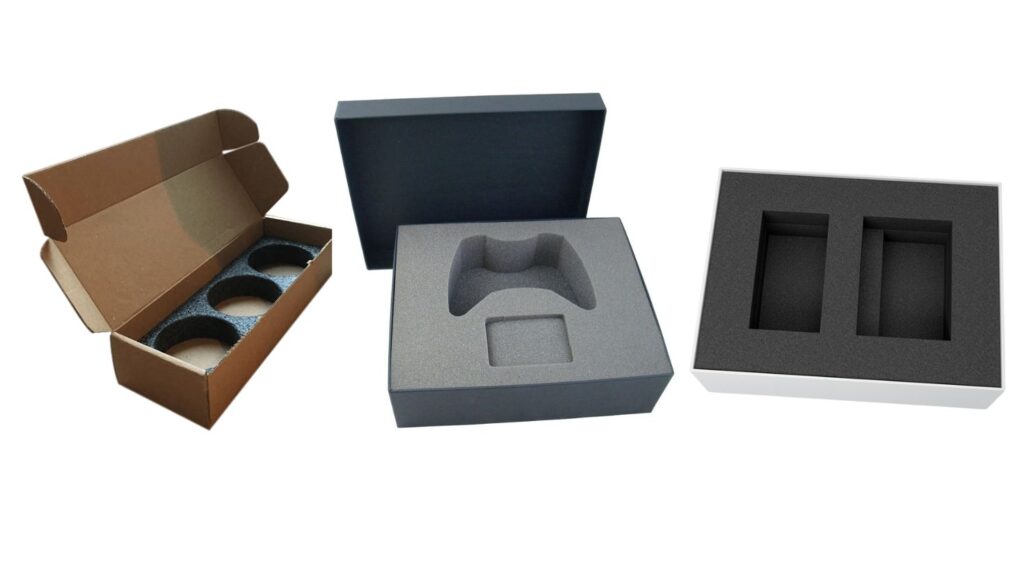
Foam inserts are a top choice for protecting fragile products. Their main advantage is excellent cushioning and shock absorption. However, not all foams are created equal. The density and type of foam determine how well they protect different products.
Types of Foam Packaging Inserts by Density

- Low-density foam (e.g., XLPE): Soft and flexible, this foam is perfect packaging inserts ideas for lightweight, fragile items like small electronics or medical devices. It fills the space, prevents movement, and absorbs minor impacts.
- Medium-density foam (e.g., EPE): Offers a good balance of cushioning and durability. EPE is common in packaging for mid-weight, moderately fragile products such as glassware, kitchen appliances, or tools.
- High-density foam (e.g., EVA): Denser, firmer, and capable of absorbing heavy shocks. EVA foam is used for protecting heavy or high-value fragile products—think precision instruments or premium bottles and nail polish in transit.
Performance and Environmental Considerations
Foam inserts excel at protecting products during shipping. Their closed-cell structures absorb vibrations and shocks, reducing the risk of damage even when packages are dropped or stacked. This is why luxury electronics and medical equipment brands often use custom-cut foam trays for their products.
However, foam materials present clear environmental challenges:
- Most foams are petroleum-based and not biodegradable.
- Recycling options are limited; foams like XLPE and EVA are rarely accepted in municipal recycling programs.
- Foam waste contributes to landfill volume and can persist in the environment for decades.
Some companies are now exploring plant-based or biodegradable foam alternatives, but these are not yet widely adopted.
In summary, Foam inserts provide unmatched protection for fragile products, with density tailored to the weight and delicacy of the item. While they solve many packaging problems, their environmental impact is significant. Brands aiming for sustainability should weigh these trade-offs or look for greener foam innovations as part of their packaging strategy.
3. Plastic Material Packaging Inserts: Features and Applications
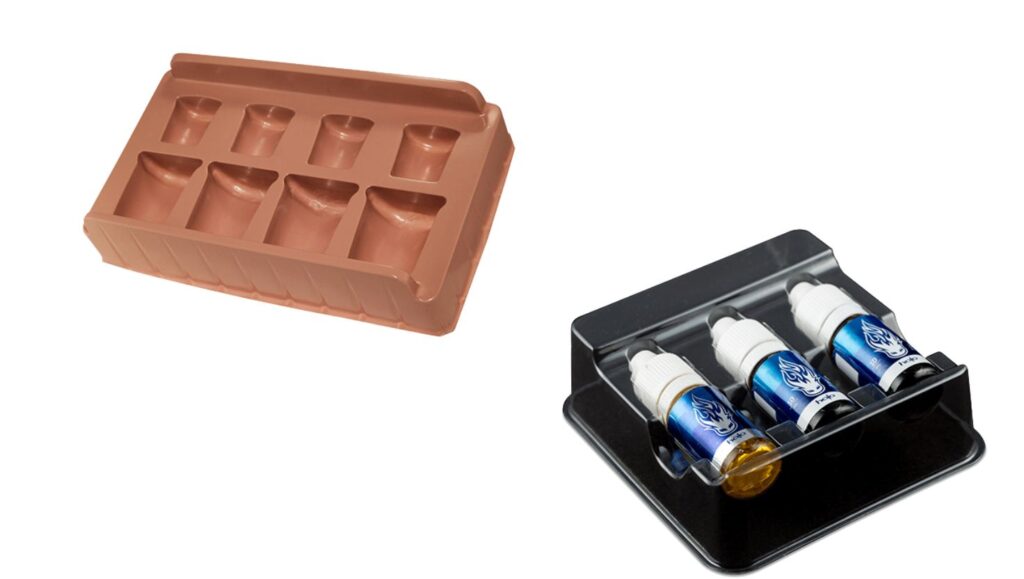
Plastic inserts are widely used for product packaging because of their versatility and strength. The two most common types are polyvinyl chloride (PVC) and polyethylene terephthalate (PET).
Characteristics of Common Plastic Inserts
- Formability: Both PVC and PET can be vacuum-formed or molded into complex, precise shapes. This makes them ideal for holding products securely and showcasing them attractively.
- Durability: Plastic inserts are resistant to moisture, chemicals, and breakage. They keep their shape over time, protecting products from impact and rough handling.
- Clarity: PET, in particular, offers crystal-clear transparency, making it popular for retail displays and packaging where product visibility matters.
Environmental Disadvantages
- Most plastic inserts are made from petroleum-based materials.
- PVC is especially problematic: it’s hard to recycle and can release hazardous substances if incinerated.
- PET is more widely recycled, but still contributes to plastic pollution if not properly managed.
- Both types persist in the environment and add to landfill waste.
Application Scenarios
- Cosmetics: High-end makeup or skincare sets often use PET inserts to hold each bottle or jar in place. The clear tray lets customers see the product arrangement and adds a premium feel. For example, a luxury lipstick set may feature a perfectly molded PET tray inside a gift box.
- Electronics: PVC inserts are common in packaging for small gadgets, USB drives, or headphones. The sturdy plastic cradles each component, preventing scratches and damage during shipment and retail handling.
Summary: Plastic inserts excel in precision, durability, and visual appeal. They’re a go-to for brands that need attractive, custom-shaped trays—especially in cosmetics and electronics. However, their environmental impact is significant, and brands should weigh this against their packaging needs and sustainability goals.
4. Fabric Material Packaging Inserts: Functions and Brand Impact
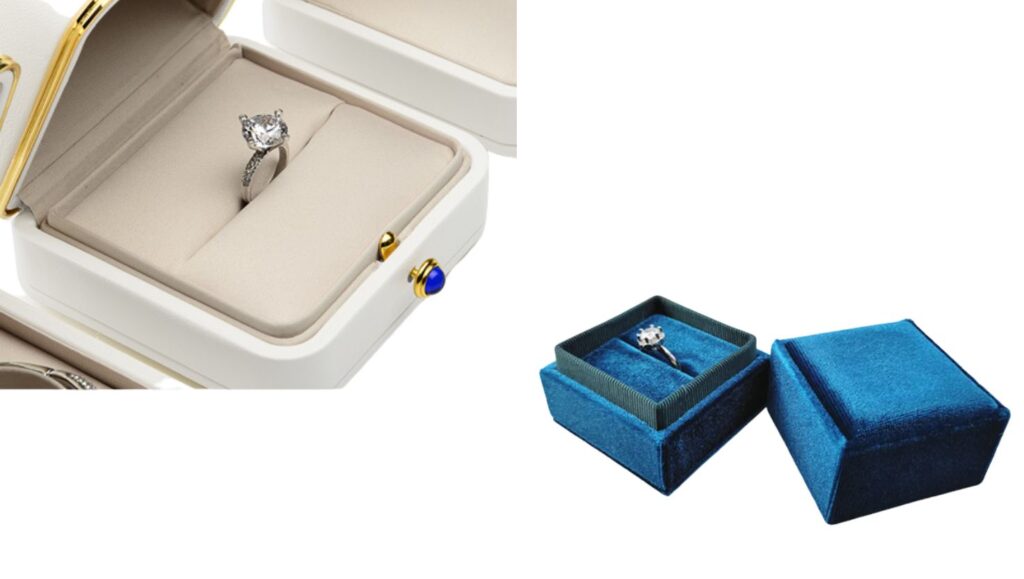
Fabric box inserts are often chosen for high-end packaging where both protection and presentation matter. The most common fabrics used are velvet, satin, and cotton.
Application in High-End Product Packaging
How Fabric Packaging Inserts Enhance Packaging
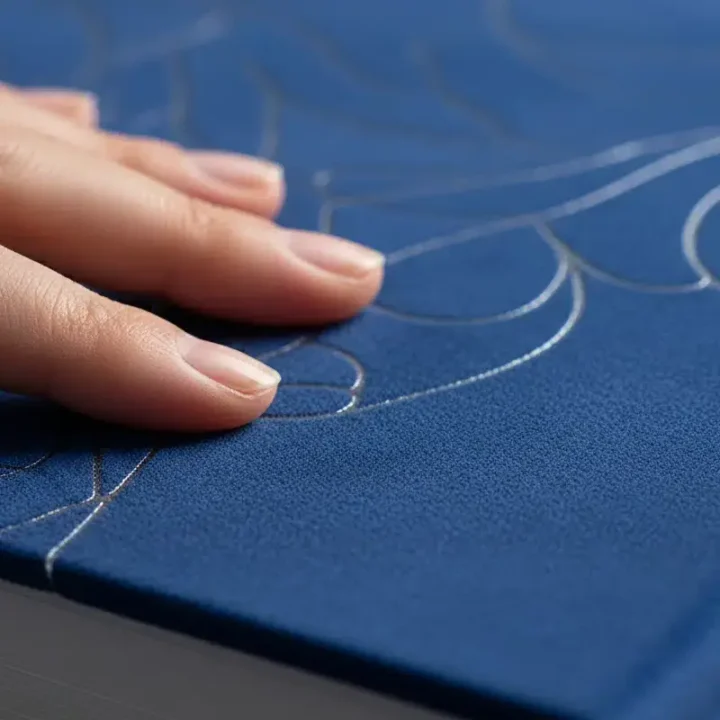
- Texture and Soft Protection: Fabric inserts cushion delicate surfaces and prevent scratches, especially on metal or glass items. Velvet and satin add a layer of softness, ensuring that luxury products arrive in perfect condition.
- Visual and Tactile Appeal: A watch resting on a velvet pillow or a necklace nestled in satin immediately signals quality. The fabric’s look and feel elevate the unboxing experience.
- Brand Image Reinforcement: Choosing the right fabric can communicate a brand’s identity. Velvet suggests exclusivity, satin implies modern luxury, and cotton signals simplicity or eco-consciousness. High-end brands use these cues to align packaging with product positioning.
Example: Luxury jewelry brands typically use velvet-lined boxes. The plush insert not only protects the item but also gives the customer a tactile sense of indulgence.
Perfume gift sets might use molded satin inserts to add shine and sophistication, while premium watches are often secured with a soft cotton or velvet pillow to prevent movement and display the piece attractively.
Summary: Fabric inserts do more than protect—they turn a product into an experience. The right fabric insert makes high-end goods look and feel special, strengthens the brand’s premium image, and creates a memorable impression from the moment the box is opened.
| Insert Type | Advantages | Disadvantages | Suitable Scenarios |
|---|---|---|---|
| Paper Inserts | Affordable, flexible, customizable; eco-friendly (especially pulp-molded inserts) | Requires precise sizing, some types (e.g., pulp-molded) have high production costs | Ideal for standard-shaped products like books and cosmetics |
| Foam Inserts | Excellent cushioning and shock absorption, great for protecting fragile products | Environmental issues (most foams are petroleum-based and hard to recycle) | Suitable for electronics, medical devices, and glassware |
| Plastic Inserts | Highly customizable, great visual appeal, durable | Environmental concerns (especially PVC which is hard to recycle) | Used in cosmetics, electronics packaging, and for products requiring high visual impact |
| Fabric Inserts | Luxurious feel, protects products from scratches | Higher cost, best suited for high-end brands | High-end jewelry, luxury goods, perfumes, watches, and other premium product packaging |
5. Promotional Packaging Inserts: Thank-You Cards and Personalized Notes
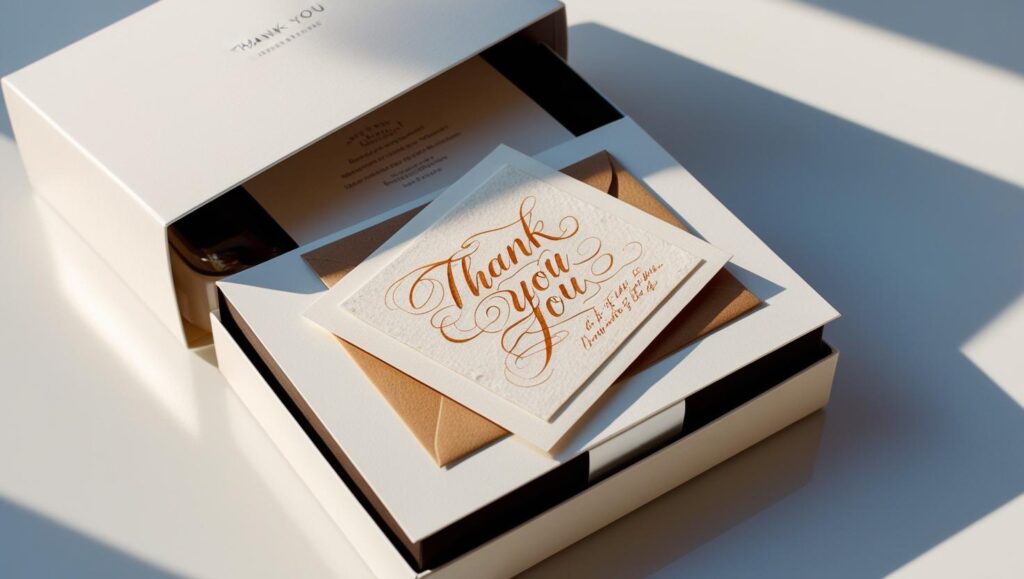
Adding a thank-you card or personalized note inside a package is a small gesture with big impact. These inserts go beyond product protection—they build relationships.
The Role of Thank-You Cards and Personalized Notes
- Expressing Brand Gratitude: A thank-you card turns a transaction into a relationship. It shows the brand appreciates the customer’s choice. Even a simple “Thank you for your order!” can make buyers feel noticed and respected.
- Strengthening Emotional Connections: Personalized notes—especially hand-written ones—can surprise and delight. Adding the customer’s name or referencing their purchase makes the message feel genuine. For instance, “Hi Sarah, we hope you love your blue notebook!” is more memorable than a generic statement.
6. Promotional Packaging Inserts: Discount Coupons and Vouchers
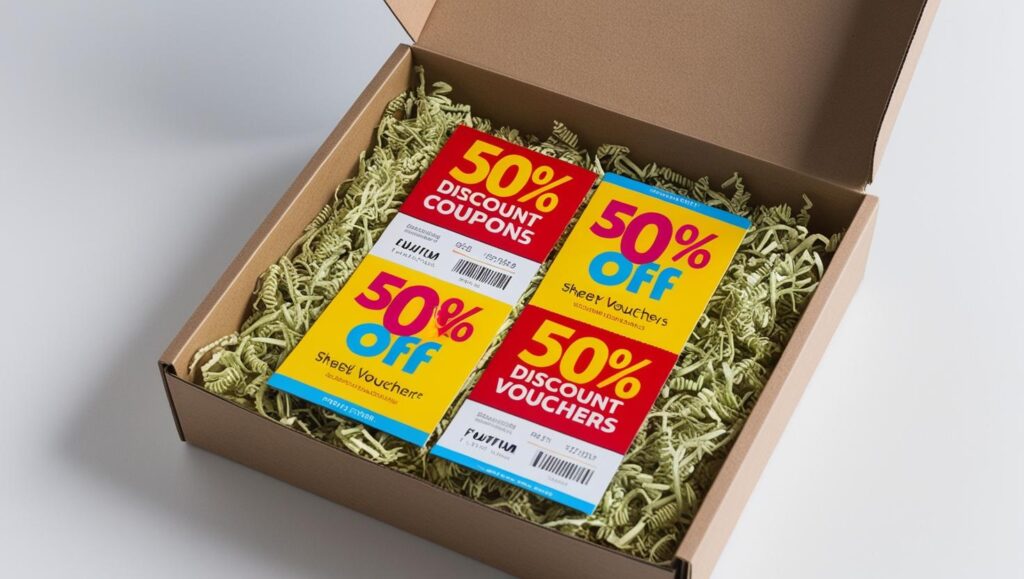
Discount coupons and vouchers are tried-and-true tools for encouraging repeat business. Including them as packaging inserts can turn a one-time buyer into a loyal customer.
How Discount Coupons and Vouchers Drive Loyalty
- Attracting Repeat Purchases: Coupons and vouchers give customers a reason to come back. A discount offer included in the box keeps your brand top-of-mind after delivery.
- Improving Customer Loyalty: Receiving a coupon feels like a reward. It increases customer satisfaction and can turn buyers into brand advocates, especially if the deal is relevant and easy to use.
7. Product Instructions and Tips Packaging Inserts: Practical Value and Customer Experience
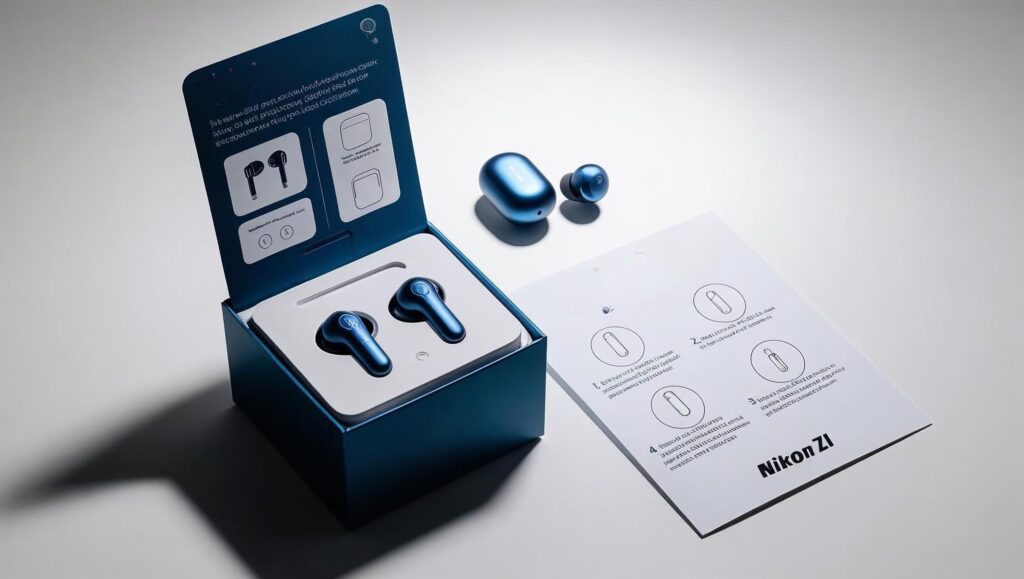
Product instruction inserts are more than just paperwork—they’re a crucial part of a great customer experience. Well-designed instructions and usage tips help customers get the most out of their purchase, reduce confusion, and build trust in your brand.
Importance of Clear, Easy-to-Understand Instructions
- Electronics Example: A wireless earbud set includes a simple, illustrated card showing how to pair, charge, and reset the device. This helps even non-technical users set up and use the product right away, reducing frustration and returns.
- Household Item Example: A nonstick pan comes with a care tips insert explaining how to season the pan, safe cleaning methods, and what utensils to use. This prevents common mistakes (like using metal spatulas) and helps the pan last longer.
Why Clarity Matters
- Simple Language: Avoid jargon and complex technical terms. Use short sentences and clear headings.
- Visual Aids: Diagrams, icons, and step-by-step images make instructions accessible for all ages and language backgrounds.
- Safety and Warranty: Clear guidance on safe use and maintenance can prevent accidents and protect your brand from liability.
8. Product Samples and Small Gifts as Packaging Inserts
Product Samples
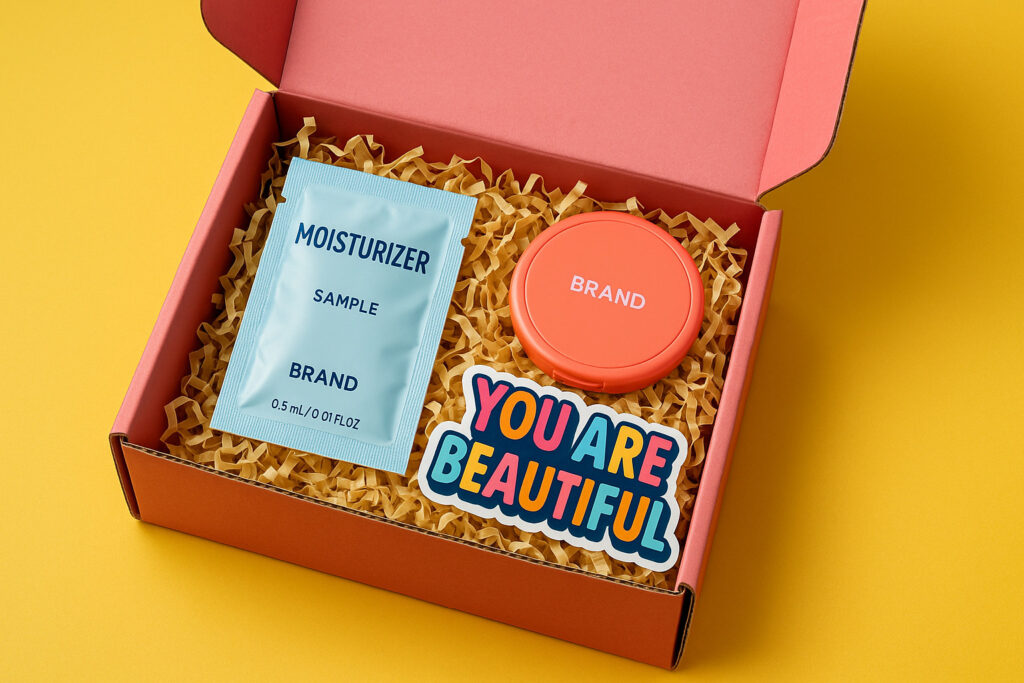
- Promotion of New Products packaging inserts ideas: Including samples (like a sachet of skincare cream or a mini snack) lets customers try something new with no risk. This firsthand experience is more convincing than advertising and can lead to future purchases.
- Increase in Product Understanding: Samples help customers learn about application, scent, taste, or other qualities, moving them closer to a buying decision.
Small Gifts
- Customer Surprise & Delight: Unexpected gifts (e.g., stickers, keychains) create positive emotions and memorable experiences.
- Brand Image Spread: Branded gifts are often kept, used, or displayed—spreading brand awareness in daily life.
Industry Examples
- Beauty: A cosmetics brand adds a sachet of a new moisturizer and a branded mirror as a gift. The sample encourages trial, while the mirror acts as a lasting, mobile brand reminder.
- Food: A snack company includes a mini pack of a new flavor and a fun sticker. The sample tempts customers to buy the full-size product, and the sticker can end up on water bottles or laptops, spreading the brand’s reach.
How to Select Samples and Gifts
- Relevance: Samples should match the customer’s interests or the purchased product (e.g., a lipstick sample with a makeup order).
- Size and Value: Gifts should be small enough for easy inclusion but valuable enough to feel special.
- Brand Alignment: Choose items that reflect brand style and values (e.g., eco-friendly gifts for a green brand).
8 Steps to Choose the Right Materials for Your Packaging Inserts
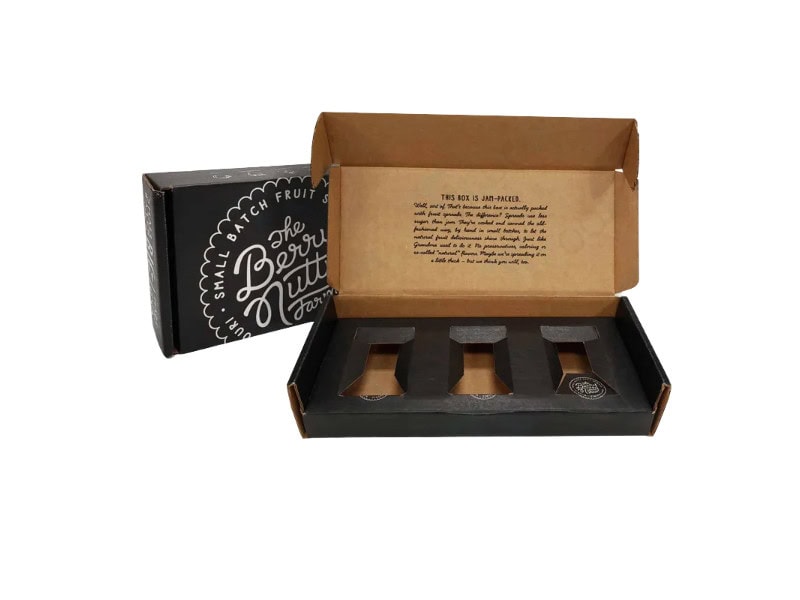
Choosing the right insert can feel tricky. After all, it affects how your product arrives and what your customer thinks of your brand. Here’s a simple 8-step guide to help you make the best choice.
1. Know Your Product Inside and Out
First, look closely at your product. Is it heavy or light? Is it fragile like glass, or strong? What is its shape? A heavy glass bottle needs strong support like foam or molded pulp, but a t-shirt might just need a simple cardboard divider to keep it neatly folded. The product itself is always the first clue.
2. Picture the Unboxing Moment
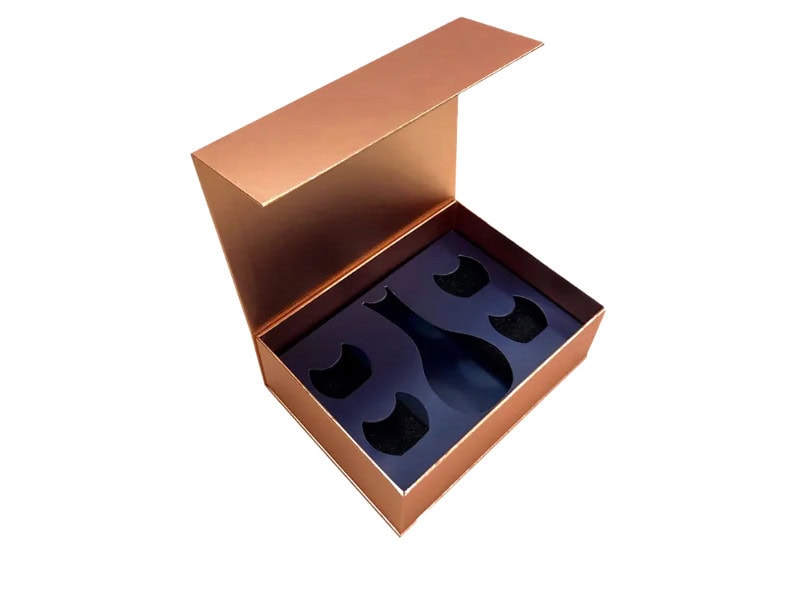
How do you want your customer to feel when they open the box? Should they feel a sense of luxury, fun, or eco-conscious pride? A fabric insert makes a product feel like a special gift. A bright, custom-printed cardboard insert can make the experience feel playful and exciting. Your choice of material helps create that feeling.
3. Match the Insert to Your Brand’s Story
Your insert should reflect your brand’s personality. If your brand is all about nature and sustainability, using recycled pulp-molded inserts sends a strong message. If you sell expensive electronics, using high-density foam shows you value quality and top-tier protection. Don’t let your insert send a mixed message.
4. Decide Your Main Goal

What is the most important job for your insert? Is it 1) protection, 2) marketing, or 3) providing information? If your top goal is to prevent breakage, choose materials like foam or sturdy cardboard. If you want more sales, focus on a well-designed promotional insert like a discount coupon. Knowing your priority makes the choice easier.
5. Be Honest About Your Budget
How much can you spend on packaging for each product? Be realistic. Cardboard inserts are very affordable and work for many items. Custom-molded pulp or foam costs more, especially if you have a small order. Your budget will quickly narrow down your options.
6. Think About the Shipping Journey
Consider how your package will travel. Will it be on a bumpy truck ride or a smooth plane trip? Will other heavy boxes be stacked on top of it? For rough, long-distance shipping, you need excellent shock absorption from materials like foam or corrugated cardboard to prevent damage.
7. Consider Your Environmental Promise
Many customers today prefer brands that care about the planet. Does your packaging show that you do? Paper-based or pulp-molded inserts are biodegradable and easy to recycle. Plastic and most foams are not, which could disappoint customers who care about sustainability.
8. Plan for Quantity and Speed
How many inserts do you need, and how quickly do you need them? Cardboard inserts can be produced fast and in small quantities. Custom pulp-molded inserts, however, require expensive molds and large minimum orders (often 10,000+), and they can take weeks to produce. Plan ahead to avoid delays.
In summary
Packaging inserts are vital tools in modern product packaging, offering protection, communication, marketing, and emotional connection. By understanding the characteristics and best uses of each type—and applying thoughtful design and selection strategies—brands can maximize both product value and customer satisfaction.
Ready to elevate your packaging and delight your customers? Start reimagining your inserts today contact us today and see the difference creative details can make!

 English
  العربية
  Deutsch (Sie)
  Español
  Français
  日本語
日本語  한국어
한국어  Italiano