
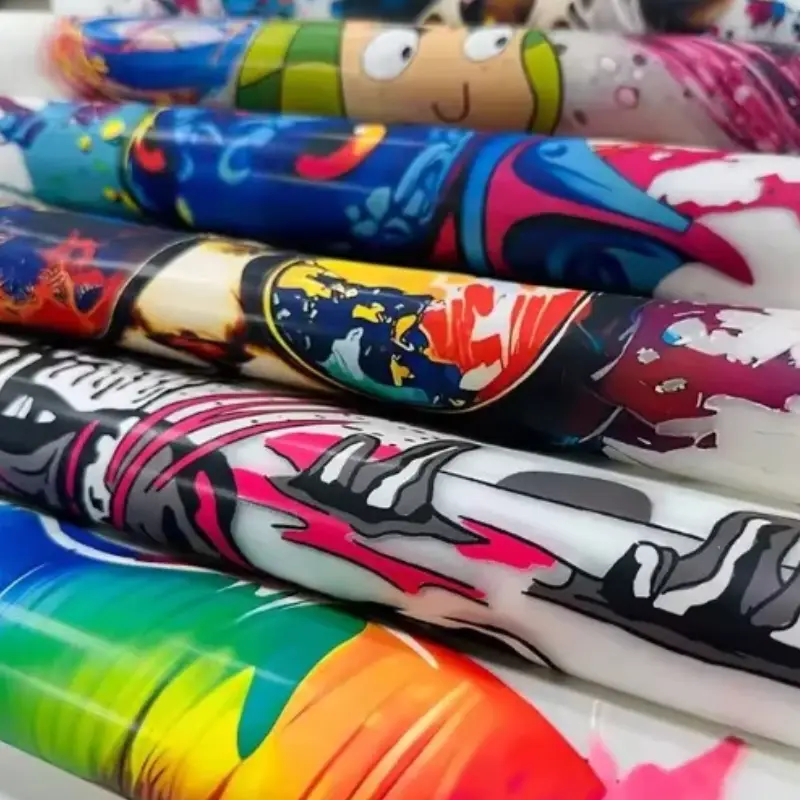
تعد الطباعة UV DTF تقنية طباعة رقمية حديثة تجمع بين المعالجة بالأشعة فوق البنفسجية وعملية النقل المباشر إلى الفيلم. وهي تتيح للشركات إنتاج رسومات ملونة ومتينة وذات تفاصيل عالية الدقة على العديد من الأسطح الصلبة أو غير المنتظمة. بدءًا من تغليف المنتجات والمواد الترويجية وصولًا إلى الزجاجات والحاويات، توفر تقنية UV DTF حلاً مرنًا للطباعة المخصصة دون الحاجة إلى لوحات الطباعة التقليدية أو إعدادات معقدة.
ما هي الطباعة بتقنية DTF بالأشعة فوق البنفسجية؟
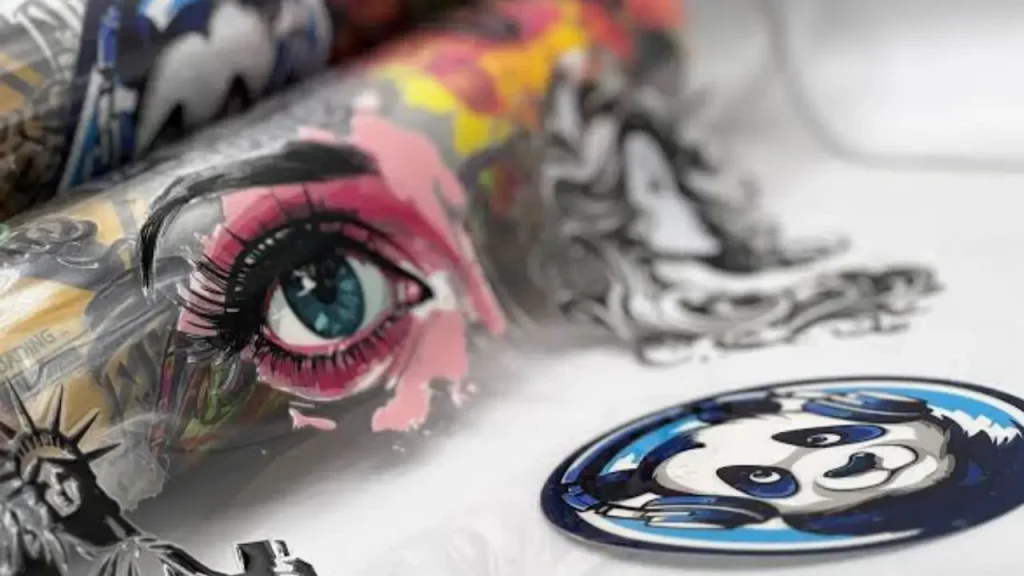
اختصار UV DTF يعني الطباعة بالأشعة فوق البنفسجية مباشرة على الفيلم. وهي عملية طباعة رقمية تستخدم أحبارًا قابلة للتصلب بالأشعة فوق البنفسجية لطباعة التصاميم على فيلم نقل خاص. ويمكن بعد ذلك نقل التصميم النهائي مباشرةً إلى مجموعة واسعة من الأسطح الصلبة.
على عكس الطباعة التقليدية بتقنية DTF، المصممة أساسًا للمنسوجات، تُستخدم تقنية DTF بالأشعة فوق البنفسجية في المقام الأول للمنتجات الصلبة أو غير النسيجية. وهي مفيدة بشكل خاص عندما تكون الطباعة المباشرة على المنتج صعبة بسبب شكله أو مادته أو خصائص سطحه.
تشمل الميزات الرئيسية للطباعة بتقنية DTF بالأشعة فوق البنفسجية ما يلي:
- الطباعة عالية الدقة: تتميز تقنية DTF بالأشعة فوق البنفسجية بالقدرة على إعادة إنتاج الرسومات التفصيلية والنصوص الصغيرة والشعارات والأنماط الملونة بوضوح ممتاز.
- توافق واسع مع المواد: يمكننا استخدام تقنية نقل الصور بالأشعة فوق البنفسجية (UV DTF) على الزجاج، والبلاستيك، والمعدن، والأكريليك، والسيراميك، والخشب، والعديد من الأسطح الملساء الأخرى.
- لا حاجة إلى لوحة طباعة: تتيح الطباعة الرقمية إنتاج تصميمات مخصصة دون الحاجة إلى الألواح أو الشاشات التقليدية.
- تأثيرات بصرية قوية: يمكن للحبر الأبيض وألوان CMYK والورنيش الاختياري إنتاج رسومات نابضة بالحياة ومتعددة الطبقات وذات مظهر فاخر.
- تخصيص مرن: يمكننا إنتاج تصاميم وشعارات وأسماء وأنماط متنوعة للمنتجات والتغليفات المخصصة.
كيف تعمل الطباعة بتقنية DTF بالأشعة فوق البنفسجية؟
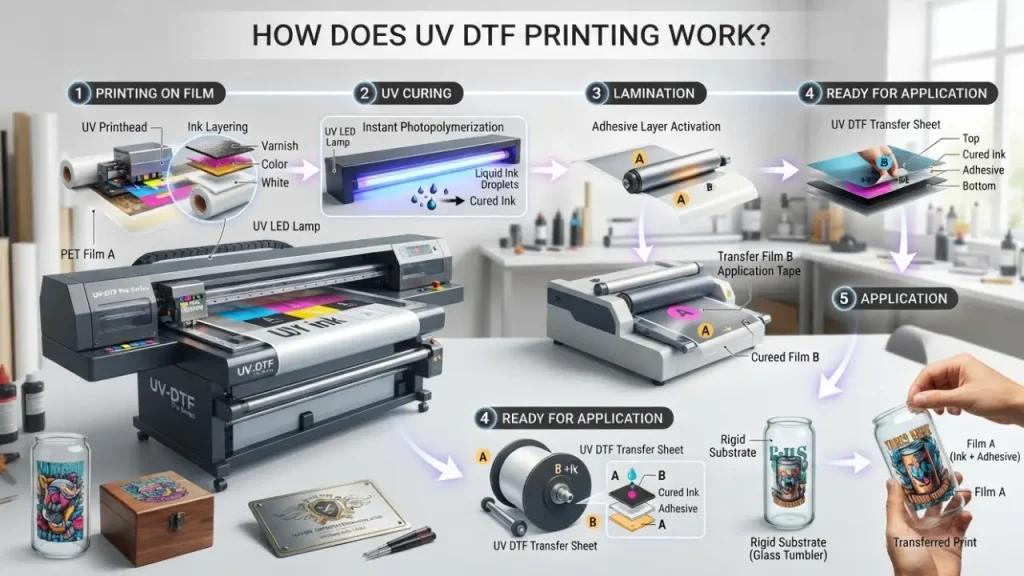
تستخدم طباعة UV DTF معدات وأحبار وأغشية نقل متخصصة لإنتاج رسومات نهائية ذاتية اللصق. وتُعد هذه العملية بسيطة نسبيًّا، مما يجعلها مناسبة للتخصيص بكميات صغيرة وكذلك للإنتاج التجاري.
تتضمن عملية الطباعة النموذجية بتقنية DTF بالأشعة فوق البنفسجية ما يلي:
- التحضير للتصميم: نقوم أولاً بإعداد العمل الفني أو الشعار أو النص أو الرسم باستخدام برنامج تصميم جرافيكي مناسب. ويجب تحسين التصميم وفقاً للحجم والألوان ومواصفات الطباعة المطلوبة.
- طباعة الأفلام: تقوم طابعة UV DTF بطباعة التصميم على فيلم A خاص باستخدام أحبار CMYK والأبيض، وأحيانًا أحبار الورنيش.
- التصلب بالأشعة فوق البنفسجية: يعمل ضوء الأشعة فوق البنفسجية على تجفيف الحبر أثناء عملية الطباعة، مما يساعد على تكوين طبقة رسومية متينة وواضحة المعالم.
- التصفيح: يتم تغليف الفيلم «أ» المطبوع بفيلم «ب» لتشكيل بنية النقل الكاملة.
- النقل: نقوم بإزالة الطبقة الداعمة المناسبة، ثم نضع الصورة المنقولة على السطح المستهدف باستخدام الضغط المناسب.
- إزالة الفيلم: بعد أن يلتصق التصميم بشكل صحيح، تُزال طبقة النقل بعناية، لتترك الصورة المطبوعة على المنتج.
تتيح هذه العملية للمصنعين وموردي مواد التغليف إنشاء رسومات مخصصة دون الحاجة إلى الطباعة مباشرةً على كل منتج على حدة.
ما هي المواد التي يمكن استخدام الطباعة بالأشعة فوق البنفسجية (DTF) عليها؟
تتمثل إحدى المزايا الرئيسية للطباعة بتقنية DTF بالأشعة فوق البنفسجية في توافقها مع العديد من الأسطح الصلبة والناعمة نسبيًّا. وهذا يجعل هذه التقنية مفيدة في مجالات التغليف والمنتجات الترويجية والسلع الاستهلاكية والتطبيقات الصناعية.
ومن بين المواد الشائعة ما يلي:
- الزجاج: يمكن تطبيق طباعة DTF بالأشعة فوق البنفسجية على الزجاجات والبرطمانات والحاويات والمنتجات الزخرفية لإنشاء علامات تجارية ومعلومات منتجات مخصصة.
- البلاستيك: يمكننا تطبيق رسومات DTF بالأشعة فوق البنفسجية على العديد من منتجات التغليف والحاويات البلاستيكية، شريطة أن يكون السطح نظيفًا وناعمًا ومناسبًا للالتصاق.
- المعدن: تتيح تقنية DTF بالأشعة فوق البنفسجية إضافة الشعارات والأنماط والرسومات التعريفية إلى المنتجات المعدنية والمواد الترويجية والحاويات.
- الأكريليك: يمكن الاستفادة من الرسومات التفصيلية المطبوعة بتقنية DTF بالأشعة فوق البنفسجية على المنتجات الأكريلية في مجال اللافتات، والواجهات العرضية، والمنتجات الزخرفية، والسلع التي تحمل العلامات التجارية.
- السيراميك: يُستخدم الطباعة المباشرة على القماش (DTF) بالأشعة فوق البنفسجية عادةً في طباعة الأكواب والأوعية الخزفية والقطع الزخرفية وغيرها من المنتجات الخزفية ذات الأسطح الملساء.
- الخشب: يمكن تزيين الأسطح الخشبية الجاهزة أو الملساء المناسبة باستخدام ملصقات DTF المخصصة المطبوعة بتقنية الأشعة فوق البنفسجية، وذلك في التطبيقات الترويجية والزخرفية.
يظل تحضير السطح أمرًا مهمًا. فالغبار والشحوم والرطوبة والأسطح غير المستوية يمكن أن تؤثر على قوة الالتصاق والمظهر النهائي.
ما هي مزايا الطباعة بتقنية DTF بالأشعة فوق البنفسجية؟
أصبحت الطباعة بتقنية DTF بالأشعة فوق البنفسجية تحظى بشعبية متزايدة لأنها تجمع بين التخصيص الرقمي والجودة البصرية الجذابة وسهولة التطبيق. وبالنسبة للشركات التي تتعامل مع المنتجات أو العبوات المخصصة، يمكن أن توفر هذه التقنية مرونة أكبر مقارنة ببعض طرق الطباعة التقليدية.
رسومات عالية الجودة
تنتج الطباعة بتقنية DTF بالأشعة فوق البنفسجية رسومات واضحة ذات خطوط دقيقة وألوان زاهية، فضلاً عن إعادة إنتاج ممتازة للشعارات والأعمال الفنية. كما يمكن للحبر الأبيض أن يساعد في إظهار ألوان أكثر قوة على الأسطح الداكنة أو الشفافة، في حين يمكن للورنيش أن يضفي تأثيرًا بصريًّا لامعًا أو ثلاثي الأبعاد.
تخصيص ممتاز
نظرًا لأن تقنية UV DTF تعتمد على الطباعة الرقمية، يمكننا تغيير التصميمات بسهولة بين دورات الإنتاج المختلفة. وهذا يجعلها خيارًا عمليًّا للمنتجات المخصصة، والإصدارات المحدودة، والحملات الترويجية، والتغليف الذي يتطلب معايير مختلفة للعلامة التجارية.
مناسب للطلبات الصغيرة والكبيرة
قد تصبح طرق الطباعة التقليدية أقل اقتصادية عند إنتاج العديد من التصاميم المختلفة. وتوفر تقنية DTF بالأشعة فوق البنفسجية مرونة أكبر، حيث يمكن إعداد كل تصميم رقميًا وطباعته دون الحاجة إلى إنشاء لوحة طباعة جديدة.
سهولة الاستخدام
يمكن تطبيق طباعة DTF بالأشعة فوق البنفسجية على الأسطح الصلبة المناسبة دون الحاجة إلى معدات طباعة مباشرة معقدة لكل منتج. وهذا من شأنه تبسيط إجراءات التخصيص ومساعدة الشركات على تزيين المنتجات بكفاءة أكبر.
تأثيرات سطحية جذابة
تتيح الطباعة بتقنية DTF بالأشعة فوق البنفسجية دمج طبقات متعددة من الحبر والورنيش للحصول على لمسات نهائية جذابة. ووفقًا للتصميم، يمكن للشركات تحقيق تأثيرات لامعة أو مزخرفة أو بارزة أو ذات طبقات مرئية تجعل العبوات والمنتجات تبرز عن غيرها.
ما هي تطبيقات الطباعة بالأشعة فوق البنفسجية بتقنية DTF؟
تُستخدم الطباعة بتقنية DTF بالأشعة فوق البنفسجية في العديد من الصناعات التي تحتاج فيها الشركات إلى رسومات مخصصة على المنتجات الصلبة. وتجعلها مرونتها ذات قيمة خاصة في مجالات العلامات التجارية والتغليف والسلع الترويجية والتطبيقات الزخرفية.
تشمل التطبيقات الشائعة ما يلي:
- عبوة المنتج: يمكننا استخدام الطباعة بتقنية UV DTF لتصنيع الزجاجات والبرطمانات والعلب والحاويات ومنتجات التغليف الأخرى المخصصة، مما يساعد العلامات التجارية على عرض الشعارات ومعلومات المنتج والأنماط الزخرفية والرسومات الترويجية.
- تغليف مستحضرات التجميل: يمكن أن تستفيد زجاجات مستحضرات التجميل، وعبوات العناية بالبشرة، وعبوات العطور، وإكسسوارات منتجات التجميل من الرسومات التفصيلية المخصصة والتشطيبات البصرية الفاخرة.
- تغليف الأغذية والمشروبات: يمكن تخصيص الأوعية الزجاجية والبلاستيكية المناسبة بإضافة العلامة التجارية أو الملصقات أو الأنماط أو التصاميم الترويجية، وذلك لتعزيز التعرف على المنتج.
- المنتجات الترويجية: يمكن تقنية DTF بالأشعة فوق البنفسجية تزيين الهدايا، والإكسسوارات، والحاويات، والمنتجات المكتبية، وغيرها من السلع الترويجية بشعارات الشركات والرسومات المخصصة.
- ديكور المنزل: يمكن إضفاء لمسة جمالية على القطع الزخرفية المصنوعة من الزجاج أو السيراميك أو الأكريليك أو الخشب من خلال إضافة أنماط مخصصة وأعمال فنية وتصاميم تحمل العلامة التجارية.
- المنتجات الصناعية: يمكن استخدام رسومات DTF بالأشعة فوق البنفسجية على بعض المكونات والأدوات الصناعية لأغراض التعريف أو وضع العلامات التجارية أو لأغراض زخرفية، شريطة أن يكون السطح متوافقًا مع ذلك.
الطباعة بتقنية DTF بالأشعة فوق البنفسجية مقابل الطباعة التقليدية
تتميز الطباعة بتقنية DTF بالأشعة فوق البنفسجية بعدة اختلافات مقارنةً بالطباعة التقليدية بالشاشة الحريرية، والطباعة بالوسادة، والطباعة المباشرة بالأشعة فوق البنفسجية. ويمكن أن يساعد فهم هذه الاختلافات الشركات على اختيار التقنية المناسبة لمنتج معين.
| الميزة | الطباعة بتقنية DTF بالأشعة فوق البنفسجية | الطباعة التقليدية |
|---|---|---|
| الإعداد | إعداد رقمي بسيط نسبيًا | قد يتطلب استخدام الألواح أو الشاشات أو أي إجراءات تحضيرية أخرى |
| التخصيص | ممتاز | أكثر ملاءمة للتصاميم الموحدة |
| الطلبات الصغيرة | مناسب | قد تكون تكاليف الإعداد أعلى |
| رسومات تفصيلية | ممتاز | يعتمد ذلك على طريقة الطباعة |
| التطبيق على الأسطح | العديد من الأسطح الصلبة | يعتمد ذلك على المعدات والعملية |
| تغييرات التصميم | سهل | قد يتطلب إعدادات إضافية |
| تأثيرات الألوان | CMYK، أبيض، ورنيش | يعتمد ذلك على طريقة الطباعة |
لا تحل تقنية UV DTF محل جميع تقنيات الطباعة التقليدية. بل إنها توفر خيارًا مرنًا إضافيًا للشركات التي تحتاج إلى رسومات مخصصة، لا سيما عند التعامل مع الأشكال المعقدة، أو عمليات الإنتاج بكميات صغيرة، أو التصاميم المتعددة.
كيف تختار الطباعة بتقنية DTF بالأشعة فوق البنفسجية لتغليف منتجاتك؟
عند اختيار الطباعة بالأشعة فوق البنفسجية (UV DTF) للتغليف، نوصي بتقييم مادة المنتج، وحالة السطح، ومتطلبات التصميم، وحجم الإنتاج، والاستخدام المقصود. فالتوليفة المناسبة بين الفيلم والحبر ومعايير الطباعة وطريقة التطبيق يمكن أن تؤثر بشكل كبير على النتيجة النهائية.
ضع هذه العوامل في الاعتبار:
- مواد التغليف: تأكد من توافق مواد التغليف والسطح مع تقنية النقل بالأشعة فوق البنفسجية (UV DTF) قبل البدء في الإنتاج الضخم.
- شكل السطح: تُعد الأسطح الملساء والمتساوية نسبيًّا أسهل في التزيين عمومًا من الأسطح شديدة الانحناء أو الخشنة أو غير المنتظمة.
- متطلبات الأعمال الفنية: يجب مراعاة حجم الشعار، والنص الصغير، وتركيبات الألوان، ومتطلبات الحبر الأبيض، واللمسة النهائية المطلوبة قبل البدء في الطباعة.
- متطلبات المتانة: قم بتقييم ما إذا كانت العبوة ستتعرض للاحتكاك أو الرطوبة أو المواد الكيميائية أو التغيرات في درجات الحرارة أو المناولة المتكررة.
- كمية الطلب: يمكن أن تكون تقنية DTF بالأشعة فوق البنفسجية مفيدة بشكل خاص عندما تحتاج إلى تصميمات مخصصة متعددة أو كميات إنتاج مرنة.
- المظهر النهائي: حدد ما إذا كنت بحاجة إلى تشطيب قياسي، أو مظهر لامع، أو مظهر بارز، أو أي تأثيرات زخرفية أخرى.
بالنسبة لمصنعي مواد التغليف والعلامات التجارية، يُعد اختبار العينات قبل بدء الإنتاج على نطاق واسع خطوة مهمة للتحقق من قوة الالتصاق والمظهر والمتانة.
لماذا تختار تقنية UV DTF للتغليف المخصص؟
غالبًا ما تكون العبوة هي أول تفاعل مادي بين العملاء والمنتج. فوجود شعار مميز أو نقش جذاب أو تشطيب عالي الجودة يمكن أن يجعل العبوة أكثر تميزًا ويساعد العلامات التجارية على تمييز منتجاتها.
توفر الطباعة بتقنية DTF بالأشعة فوق البنفسجية العديد من المزايا للتغليف المخصص:
- الاعتراف بالعلامة التجارية: يمكننا طباعة الشعارات وأسماء العلامات التجارية والرسومات الفريدة لخلق هوية بصرية متسقة للعلامة التجارية عبر جميع منتجات التغليف.
- تصميمات مرنة: يمكن إنتاج خطوط منتجات متنوعة، وحملات موسمية، وتصميمات مخصصة للعملاء دون الحاجة إلى تغيير ألواح الطباعة التقليدية.
- مظهر فاخر: يمكن أن تضفي الرسومات التفصيلية وتأثيرات الورنيش الاختيارية على العبوة مظهرًا أكثر رقيًّا وجاذبية.
- التخصيص الفعال: تتيح تقنية النقل بالأشعة فوق البنفسجية (UV DTF) لموردي مواد التغليف تلبية الطلبات المخصصة بكفاءة، لا سيما عندما تكون هناك حاجة إلى عدة تصاميم.
- نطاق واسع من الاستخدامات: يمكننا توفير خدمات الطباعة المخصصة للزجاجات والحاويات والتغليفات الترويجية وغيرها من المنتجات ذات الأسطح الصلبة المناسبة.
الخلاصة: هل تعد طباعة DTF بالأشعة فوق البنفسجية الخيار المناسب لشركتك؟
تعد الطباعة بتقنية DTF بالأشعة فوق البنفسجية تقنية نقل رقمية متعددة الاستخدامات تُستخدم لطباعة رسومات عالية الجودة على الأسطح الصلبة والناعمة نسبيًا. وبفضل ألوانها الزاهية وتصميماتها التفصيلية وإمكانية التخصيص المرنة وسهولة تطبيقها، أصبحت هذه التقنية حلاً جذابًا في مجالات التغليف والمنتجات الترويجية والسلع الزخرفية والمنتجات التي تحمل علامات تجارية.
بالنسبة للشركات التي تسعى إلى تحسين تخصيص التغليف، يمكن أن توفر تقنية DTF بالأشعة فوق البنفسجية طريقة عملية لإنشاء تصاميم جذابة دون الاعتماد كليًّا على طرق الطباعة التقليدية. ومع ذلك، يجب دائمًا تقييم مواد التغليف وحالة السطح ومدى تعقيد التصميم ومتطلبات المتانة قبل الشروع في الإنتاج.
هل تبحث عن حلول تغليف مخصصة وموثوقة؟ اتصل بنا للحصول على تغليف مطبوع بالأشعة فوق البنفسجية بالجملة عالي الجودة، مصمم خصيصًا ليتناسب مع علامتك التجارية وتصميم منتجك ومتطلبات الطلبات بالجملة.

 العربية
  English
  Deutsch (Sie)
  Español
  Français
  日本語
日本語  한국어
한국어  Italiano